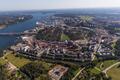
Stockholm Royal Seaport (Norra Djurgårdsstaden) has developed a comprehensive, integrated stormwater system that purifies and slows storm water and meltwater before it is released into the sea.
Stockholm Royal Seaport (Norra Djurgårdsstaden) has developed a comprehensive, integrated stormwater system that purifies and slows storm water and meltwater before it is released into the sea.
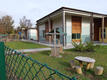
Ronneby municipality is investing in Cradle to Cradle® as a method to achieve a circular economy, healthy materials, diversity and renewable energy. The method has been implemented in Hulta preschool, creating an environment of conscious material choices together with a stimulating outdoor environment and teaching. Cradle to Cradle® (C2C) is a concept that takes a comprehensive and positive approach to all three dimensions of sustainability: environmental, social and economic. It uses a methodology based on a circular economy, healthy materials, diversity, and renewable energy solutions.

Glava Energy Centre is a hive of activity, with a number of projects and collaborations in education and innovation to develop more efficient and sustainable solar-energy solutions to contribute to a fossil-free future. Glava Energy Centre is an arena in which a broad range of partners cooperate to create new opportunities for innovation, learning, development and testing in the field of photovoltaic, or PV, solar energy –the most common type of solar cells. The aim of the centre is to contribute to sustainable energy solutions and more efficient use of energy.

"A model created for careful renovation of public housing based on sustainability as well as ecologically, socially and economically." Byggdialog Dalarna is an industry association for the construction and real estate sector in Dalarna with the mission to support and develop the industry towards a more sustainable perspective.

Trains and buses in Stockholm have been using 100% renewable energy since 2017 and the city aims to provide the most sustainable public transport in the world. The Stockholm public transport system (SL) consists of around 450 bus lines, three shuttle boat lines and a metro system covering a total of 100 kilometres, in addition to other trams and local trains. Every day almost 800,000 people travel by public transport in the Stockholm region.

Älskade stad (‘Beloved City’) is a unique collaboration to reduce vehicle traffic in Stockholm city centre and inspire others to introduce more sustainable environmental initiatives for a vibrant city. Delivery vehicle traffic in and out of cities is increasing. To promote a clean and accessible city centre, delivery company Bring, real-estate company Vasakronan, waste and recycling company Ragn-Sells and the City of Stockholm have teamed up to found a commercially sustainable model. The hope is that more organisations will join this initiative.
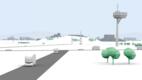
Drive Sweden Innovation Cloud is the meeting point, marketplace and digital tool for cooperation, innovation and creating commercial services for connected automated mobility. We are on the verge of a radical shift within automated mobility. In a few years we will see entirely new mobility business models, helping to enable sustainable cities. But this development requires securely connected semi-autonomous and autonomous vehicles. Drive Sweden Innovation Cloud is a leading technology and service platform in this field, aiming to support and increase the automation of transport.

The Swedish island of Gotland has experienced a severe water crisis in recent years, negatively affecting tourism and local businesses. To address this problem, innovative circular water solutions are being tested and evaluated in the area of Storsudret in southern Gotland. Gotland has been selected as one of the demonstration cases for the EU NextGen project, which aims to boost sustainability and provide new water market dynamics in 10 high-profile demonstration cases across Europe. The project will assess, design and demonstrate a wide range of integrated system solutions.
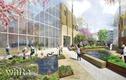
The city of Linköping has established Ebbepark as a district for sustainable transformation, inviting partners to develop solutions to progress towards a climate-neutral city. The district of Ebbepark plays a key role in Linköping’s efforts to become a sustainable, climate-neutral city. The entire district is designated as a testbed that will be in constant change. The focus of the testing carried out in Ebbepark is sustainable solutions; environmentally, socially and economically.
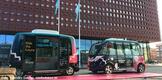
Smart mobility solutions are key to sustainable cities. The Swedish region of Östergötland has become a hot spot for a number of innovative solutions, such as city district design for sustainable transport, car and bike fleets, intelligent traffic safety systems and much more. The region of Östergötland has become a hub for smart mobility solutions, with a wide range of pioneering projects. Solutions include overall district planning and design, as well as specific projects such as sharing services and testing of autonomous vehicles to develop the sustainable city.