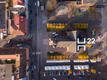
Helsingborg's international H22 City Expo in 2022, along with its preparatory work, is an ambitious investment that aims to lead the way to smarter, more sustainable urban life and planning. The goal is for Helsingborg to be one of Europe’s most innovative cities in 2022. By 2030, 60 percent of the world’s population will live in cities. In addition, alarming facts about climate change, as well as an increasing number of people with mental-health issues, require society to take action.
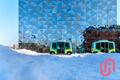
Urban ICT Arena is a co-creation hub in Kista Science City, one of the world’s leading ICT clusters, that believes in the importance of cooperation in meeting the goals set out in the UN’s Agenda 2030. Urban ICT Arena provides tools for ICT companies and the public sector to overcome tomorrow’s challenges today. Kista Science City is Urban ICT Arena’s ‘reality lab’. It has real people in real buildings, with real traffic and real conditions. This is where the Urban ICT Arena IoT (Internet of Things) test bed is located.

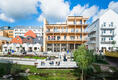
Vallastaden is an unusual city district whose new model for planning and building has led to an urban environment centred around the residents. With its strong focus on social, ecological and economic sustainability, Vallastaden is an inspiring example for future urban development. Vallastaden in Linköping, Sweden, is a newly built city district that’s unique in how it challenges the traditional way of building cities. The entire district has been planned and built with an emphasis on social and ecological sustainability, which includes listening to and involving residents.

Brf Viva was Sweden’s most sustainable and innovative housing project when it was built. Its many smart solutions in energy efficiency and building materials, as well as pioneering trialling of new ideas, make Viva an instructive and inspirational sustainable-living housing development. Solar-power systems, energy storage, heat recovery from ventilation (FTX), car and electric bike pools, remote workplaces and resource-efficient construction using low-carbon concrete.

KTH Live-In Lab is a platform for accelerated innovation in the real-estate sector with a focus on digitalisation and sustainability. The purpose of KTH Live-In Lab is to reduce lead times between research results and market introduction. Located in Stockholm on the campus of Sweden’s largest technical university, KTH Live-In Lab aims to help bring about the sustainable and resource-efficient buildings of the future. Most test beds in KTH Live-In Lab are operated in real environments for testing and researching new technologies and new methods.

A Working Lab is an innovative concept, combining office space and an arena for exchanging ideas, knowledge and experience between academia, business and society, with a strong focus on sustainability. A Working Lab is both a location and a concept, offering innovative environments for education, work and innovation in the centre of the university campus at Johanneberg Science Park in the Chalmers University area of Gothenburg.

Smart Housing Småland is an internationally leading innovation environment, developing smart and sustainable housing and construction solutions based on glass and timber. Amid ongoing global urbanisation, there is an urgent need to build sustainable cities using eco-friendly construction and energy solutions with optimal use of natural resources. This has put the spotlight on timber and bio-based materials.

The new district of Brunnshög in the city of Lund will be home to the world’s largest LTDH network (low-temperature district heating). The heating network is based almost entirely on fossil-free surplus heat recovered from MAX IV, another of Lund’s many innovative facilities. The city of Lund has close to 120,000 inhabitants and is growing fast. Lund is perhaps best known for its university, and a large percentage of the population is made of students and researchers.

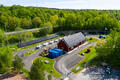
Recycling centers might not be famous for their aesthetically pleasing buildings. But in Kristianstad, the newly renovated and updated recycling centers are just that. Kristianstad’s municipality has five recycling centers, where locals can leave their bulky waste for recycling. The recycling centers are going through a modernisation effort, where they are either being rebuilt or improved, with more focus on effectively sorting the waste and making the most of the resources as well as improving their aesthetic and service to customers.

‘Drizzle’ is a centre of excellence committed to high-quality R&D in pioneering stormwater solutions that address several challenges: minimising pollution loads on receiving waters; minimising the risk of urban flooding; and taking advantage of the opportunities offered by stormwater run-off. Traditionally, stormwater management has primarily been regarded as a problem of quantity. This has led to a focus on directing water away from urban areas as fast as possible to avoid flooding.