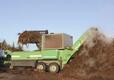
Maping and evaluation of the appropriate composting technologies in order to identify the most suitable option for Narva. The objective of this project is to map and evaluate the appropriate composting technologies in order to identify the most suitable option for Narva. The technical, economic and environmental aspects of potential municipal-scale composting technologies will be evaluated. The most optimal composting approach will form the basis for further development of a system for the separate collection and treatment of biowaste in Narva.
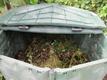
The separate composting of biodegradable waste, generated by families living in individual houses. The planned technology comprises the separate composting of biodegradable waste (BW), generated by a family living in an individual house, and the use of compost on site (in the same land parcel). A particularity of the Taurage region, compared with the majority of other regions in Lithuania, is the large share of the population living in houses rather than flats (more than 54%).
The location of the project is Palanga resort. The particularity of this town is a pronounced seasonality, and also high expectations for the appearance of the town. The aim of the project is to suggest the most environmentally and economically suitable scenario for the treatment of biodegradable waste (BW), including from municipal waste sources and sewage sludge from Palanga municipal waste water treatment plant (WWTP). The current situation is that most municipal waste goes to Dumpiu landfill. The separate collection of recyclables started in 2011.
Improvement of the collection and processing of biowaste in the Šiauliai region. The aim of the project is to improve the collection and processing of biowaste in the Šiauliai region. Every year more than 48.9 tonnes of biowaste is delivered to regional dumpsites, totalling 45% of all waste collected. At the moment there is only one working composting site in the Šiauliai region and during 2012 there has been a plan to establish four additional composting sites in different municipalities.
Improvement of waste management system. Currently, municipal waste from residents and small businesses in the Alytus region is collected and delivered to Alytus region landfill. After building the planned mechanical and biological waste treatment facility, all the collected mixed municipal waste will be co-fed into a mechanical-manual sorting line, and after that into the collection bunker.
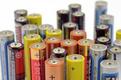
Evaluation of the need for battery recycling capacity building in Belarus. The aim of the project is to evaluate the need for the battery recycling capacity building in Belarus, folowed by recommendations for managing the waste stream.
Evaluation of the possibility to use the existing system of landfill gas collection at Trostinets as a model for Soligorsk landfill. This project is apt because there are 186 landfills in the Republic of Belarus and only one of them has a gas collection system – Trostinets landfill in Minsk. Since Belarus is part of the UN Framework Convention on Climate Change, there are various plans to meet the agreement, including landfill gas collection systems.
The project covers:
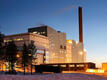
The generation of both district heating and electricity almost entirely from waste makes the Dåva CHP (combined heat and power) plant extremely energy efficient and environmentally sustainable. Its renewable sources include sorted waste and forest industry residues. Dåva is at the heart of Umeå’s district heating supply and is northern Sweden’s largest power plant based on solid fuel. The Dåva area has two CHP plants that use advanced filtering systems to minimise emissions, making Dåva a leading innovator in combining energy efficiency and low environmental impact.
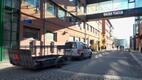
Last mile delivery is the final stage in a good’s journey, where it is delivered to the end customer – the most carbon intensive stage. The growth of e-commerce is leading to increased traffic congestion and CO2-emissions from delivery vehicles. Carbon-neutral alternatives for last mile deliveries are currently being explored and some of the concepts being trialed in Gothenburg. <h2> Micro terminal for transport of waste, goods and packages </h2>
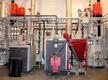
In Kalmar you find a demonstration plant for a combination of heating systems with new technology, where different system concepts and control strategies are measured and evaluated. In Kalmar you find a demonstration plant for a combination of heating systems with new technology, where different system concepts and control strategies are measured and evaluated.