Region Gotland has implemented a digital urban planning process to support case management, digital mailboxes and other aspects of administration. This is contributing to an open, gender-equal and sustainable planning and construction process. Region Gotland, like many Swedish municipalities and regions, faces the challenge of digitalising its urban planning process.
MAX IV is a world-leading accelerator physics laboratory for research into synchrotron radiation. It is also unique in its ambitious sustainability aims. Its smart solutions in energy efficiency, biological diversity and waste management make it the first building to receive the BREEAM-SE environmental classification. MAX IV is a world-leading facility in the field of accelerator physics that is available for use by scientists from universities and industry around the world.
When the concept of Vision Zero was introduced in 1997, it transformed the view of road safety work. Instead of trying to prevent all accidents, the goal is for no one to die or be seriously injured in a road accident. The initiative has led to a halving of deaths on Swedish roads. Sweden has a long history and solid reputation in road safety solutions. Vision Zero is an initiative by the Swedish government with the ambitious goal of eliminating road traffic deaths and serious injuries. Vision Zero states that no one should be killed or suffer lifelong injury from a road traffic accident.
Smartroad Gotland is a wireless electric road, charging electric trucks and a buses on a public road. The unique demonstration project is developed to gain knowledge and pave the way for the global implementation of electric roads. Road freight accounts for nearly one-fifth of annual global oil consumption. One solution that has the potential to achieve the goal of fossil-free transport is electric roads that charge vehicles wirelessly as they drive. This technology is already ”on the way” in Visby, Sweden, in the unique demonstration project Smartroad Gotland.
Many cities around the world are growing rapidly, which increases the need for electricity. In the city of Uppsala, Sweden, a possible solution is being developed, piloting one of Sweden’s largest battery storages to meet the increased demand, enable continued expansion and mitigate increased capacity needs. The area of the battery storage in about half a football field in size and provides a capacity corresponding to what it takes to power Uppsala municipality’s entire street lighting.
The CoordiNet project is exploring the benefits of creating a ‘power flexibility market’. When electricity demand is high, market participants can offer to reduce their electricity use or increase electricity production and sell excess power to the grid operator. Flexible electricity use is an often-overlooked opportunity to increase energy efficiency and achieve more sustainable use of power. In fact, unlocking the potential of flexibility is vital for the transition to carbon-neutral cities, by solving challenges such as capacity shortage and grid congestion.
In the Evolution Road project, the next generation of ERS (Electric Road System) is being demonstrated and tested at a test site in Lund. ERS provides a charging infrastructure for all kinds of electric vehicles – with benefits such as longer driving range, seamless charging and reduced need for heavy batteries. In order for the transition to fossil-free and electric vehicles to take place, and to reach climate goals, we need accessible and efficient charging infrastructures for electric vehicles.
With its 9500 sqm the Botanical Roof Garden of Augustenborg is an ever-evolving testbed of urban greening. Here you get to see more than 20 different solutions for greening a rooftop, from the most extensive green roofs to biosolar solutions and even a rooftop kitchen garden. The Botanical Roof Garden of Augustenborg first opened to the public in 2001. During the last 20 years the garden has evolved from a small showcase to a world-renowned testbed of urban green infrastructure. Several research projects are active on the roof.
Ohboy the Bicycle House in Malmö is designed, built and owned by architects Hauschild + Siegel. Owning the process from drawing board to finished product has allowed the architects control the entire concept and ensure it meets their vision of a smarter way to live. Cykelhuset Ohboy comprises both rental apartments and a long-stay hotel. All apartments are designed for a simple way of life, helping residents achieve a cost-effective lifestyle. Instead of using a large area for car parking, this housing concept wants to encourage residents to either cycle or use public transport.
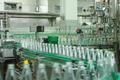
Siptex is the world’s first large-scale facility of its kind. It sorts textiles by colour and fibre composition using near-infrared light, allowing it to handle large flows and produce textile fractions suited to different recycling processes. <h2> A new link in the textile value chain </h2>