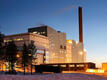
The generation of both district heating and electricity almost entirely from waste makes the Dåva CHP (combined heat and power) plant extremely energy efficient and environmentally sustainable. Its renewable sources include sorted waste and forest industry residues. Dåva is at the heart of Umeå’s district heating supply and is northern Sweden’s largest power plant based on solid fuel. The Dåva area has two CHP plants that use advanced filtering systems to minimise emissions, making Dåva a leading innovator in combining energy efficiency and low environmental impact.
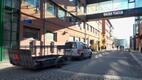
Last mile delivery is the final stage in a good’s journey, where it is delivered to the end customer – the most carbon intensive stage. The growth of e-commerce is leading to increased traffic congestion and CO2-emissions from delivery vehicles. Carbon-neutral alternatives for last mile deliveries are currently being explored and some of the concepts being trialed in Gothenburg. <h2> Micro terminal for transport of waste, goods and packages </h2>
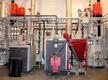
In Kalmar you find a demonstration plant for a combination of heating systems with new technology, where different system concepts and control strategies are measured and evaluated. In Kalmar you find a demonstration plant for a combination of heating systems with new technology, where different system concepts and control strategies are measured and evaluated.
Extraction of compostable soil from household waste At Björnhyttans recycling center compostable soil is extracted from the household waste.
How it works:
Household waste is emptied on the conveyor belt and then it undergoes a homogenization process and several separation steps to separate the organic waste from the inorganic waste.
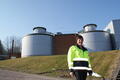
Purification of wastewater in Borlänge In Borlänge there are two main wastewater treatment plants
•Borlänge
•Idkerberget
In addition to these, there are also two smaller treatment plants located in Barkar Gärdet and Alderbäcken.
In a year approximately 5,000,000 m3 of water are being purified.
Do you have a waste management problem and need ideas about how to handle it? And do you want to generate a profit in the process? You can learn from Sweden’s Gävle region, where you’ll find pioneering waste management sites, biogas plants, compost plants and waste management experts. Gästrike Återvinnare (Gästrike Recyclers) is an organisation that works on sustainable social development by imparting knowledge and providing solutions, enabling people to be involved in and contribute to a better environment.
District heating, district cooling, electricity and wood pellets in a smart combination for the next generation. Falu Energy & Water produce district heating, district cooling, electricity and wood pellets from clean wood chips and biomass residue from the nearby forest industry. At Västermalmsverket in Falun the energy is locally produced and distributed to local residents. The eletricity produced is equivalent to 80 000 MWh per year.
The municipality-owned waste plant NSR works with developing all stages of waste management for six municipalities in southern Sweden. NSR refers to its holistic approach to waste management as ‘from table to soil’, which incorporates various aspects of recycling, from smart kerbside waste collection to turning food waste into fuel and biofertilizer. NSR (Nordvästra Skånes Renhållnings AB) manages waste from 330,000 residents in the municipalities of Helsingborg, Höganäs, Bjuv, Åstorp, Ängelholm and Båstad.
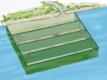
A new water purification system uses floating walls, or baffles, to improve purification. The solution has been developed by a Swedish company and can be used in all kinds of dams, for surface or storm water, leachate, industrial water and sewerage water. A high level of purification in dams and basins requires the water to travel sufficient distance so the particles have time to form sediment on the bottom before the outlet.
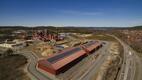
Dåva Landfill and Waste Center in Umeå AB (Dåva DAC) takes care of many types of waste. Some examples are ashes from waste incineration and combustion of biofuels, contaminated soils, various waste products from the industry, waste for landfill from households and businesses, asbestos and sulphide soil. We see this as exciting wastes, often with great potential of recycling. We work with flexible solutions, in order to recycle as much as possible. There are many advantages of sorting the material correctly and extracting metals.