

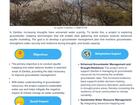
In Zambia, increasing droughts have worsened water scarcity. To tackle this, a project is exploring groundwater mapping technologies that will enable data gathering and analysis towards advanced aquifer modelling. The goal is to develop a groundwater management plan that monitors groundwater, strengthens water security and resilience during droughts, and builds capacity.


Thailand’s agricultural sector is increasingly vulnerable to extreme weather events driven by climate change, which threatens farmers’ livelihoods and food security. To address these challenges, a project was launched to explore the feasibility of using blockchain technology to create a viable real-time parametric crop insurance system. This system aims to reduce transaction costs, automate transparent indemnity payments, and make crop insurance more accessible and efficient for farmers


Agriculture in St Kitts and Nevis faces significant challenges due to climate change, particularly water scarcity and soil degradation. This project enhances climate resilience by improving water management practices. It includes the development of sustainable farming practices, capacity-building, and the introduction of innovative irrigation systems, as well as drought risk modelling. The project aims to boost agricultural productivity while ensuring environmental sustainability, thereby strengthening the resilience of the agricultural sector against climate change.


Management of transboundary water resources in the Hong-Thai Binh River basin in Vietnam is crucial due to the challenges posed by climate change. To address this, a project was launched to localize water resources management technology, focusing on improving data availability and accuracy for water resource planning. This initiative involved the identification and customization of advanced technologies to monitor and forecast transboundary water flow into Vietnam, as well as installation, testing and capacity-building.