Description
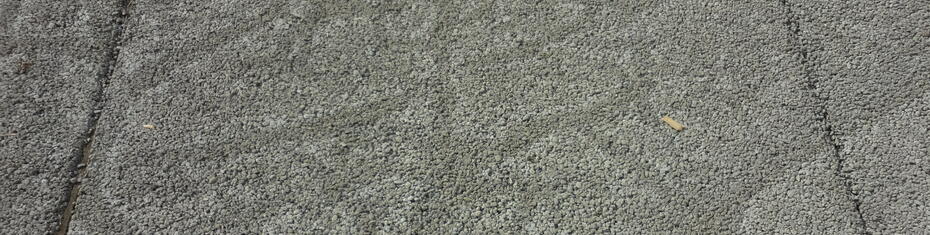
Permeable pavements and parking lots are often constructed in urban settings to facilitate storm water runoff and mitigate urban flooding and storm water overflow risks. Though they are usually built from conventional materials (sustainable, recycled alternatives such as recycled glass are also available), permeable pavements build on ecosystem services provided by soil, allowing water capture and infiltration. The permeable surfaces provide greater water uptake. The water is infiltrated, and to an extent purified, before recharging the groundwater. The resulting retention decreases runoff rates and reduces pressures on urban storm water systems. There are various types of permeable pavement, including permeable asphalt, permeable concrete, concrete grid pavers, loose gravel or stone-chippings, resin-bound paving, and porous plastic “pavement” structures designed to have grass growing in the pores. The general design includes a permeable surface structure that allows water containing relatively coarse solid to pass through to an underlying reservoir where it is collected and stored. It can then slowly infiltrate into the compacted subgrade layer, trapping sediments and other finer materials, before eventually reaching the groundwater. Some systems also have under drains connected to the sub-base reservoirs for the purpose of transporting the water to the urban storm drain system.
As the frequency and strength of extreme weather events increase, permeable pavements and parking lots can help mitigate flooding and overflow risks from could bursts in urban and semi-urban settings. An additional benefit is mitigation of the urban heat island effect.
Implementation
Permeable pavement requires an analysis of the system’s retention capacity and underlying reservoir to determine its required depth. This analysis might also include expected intensity and distribution of local rainfall. There are a variety of permeable surface types. Criteria that determine which type is chosen include seasonal conditions (for example cold winters), expected traffic load, closeness to drinking water source, etc. The construction typically consists of a compact subgrade layer placed at the bottom of the system, a sub-base water storage reservoir above it and the permeable pavement at the surface. Maintenance includes regular monitoring and cleaning, for example from clogged or unwanted vegetation. An additional step might include preventative weeding.
Environmental Benefits
- Reduces peak flows and reduces pressures on storm water infrastructure during extreme precipitation events (cloudbursts).
- Contributes to runoff water purification through chemical, biological and physical processes as it passes through the permeable structure and underlying soil.
- Absorbs less heat than other non-permeable structures, reducing the urban heat island effect in cities.
- Improves groundwater recharge.
Socioeconomic Benefits
- Serves as a multifunctional investment as both pavement and a storm-water management tool. Resources and space can thus be utilized more efficiently.
- Absorbs sound, in turn reducing noise levels.
Opportunities and Barriers
Opportunities:
- Multifunctional structures that are efficient investments with climate change adaptation benefits
- Low cost investment
- Do not require major overhauls of existing infrastructure (for example, in comparison to storm water pipes, interventions are relatively localized)
- Relatively simple and easily accessible technology for majority of locations
- Required maintenance is relatively simple
Barriers:
- Areas with high contaminant and pollutant levels risk groundwater and soil contamination due to the high permeability and limited capacity for purification. Detailed planning and tests should therefore be conducted to ensure the safety
- Permeable parking lot surfaces require continuous monitoring and maintenance to ensure their maximum capacity is sustained. An example of maintenance is vacuum treatment to avoid clogging three to four times a year
- May have clogging problems in locations using road salt during winter months
Implementation considerations*
Technological maturity: 1-2
Initial investment: 2-3
Operational costs: 3-4
Implementation timeframe: 2-3
* This adaptation technology brief includes a general assessment of four dimensions relating to implementation of the technology. It represents an indicative assessment scale of 1-5 as follows:
Technological maturity: 1 - in early stages of research and development, to 5 – fully mature and widely used
Initial investment: 1 – very low cost, to 5 – very high cost investment needed to implement technology
Operational costs: 1 – very low/no cost, to 5 – very high costs of operation and maintenance
Implementation timeframe: 1 – very quick to implement and reach desired capacity, to 5 – significant time investments needed to establish and/or reach full capacity
This assessment is to be used as an indication only and is to be seen as relative to the other technologies included in this guide. More specific costs and timelines are to be identified as relevant for the specific technology and geography.
Sources and further information
- UNEP-DHI Partnership: Permeable pavements and parking lots
- Ashley, E. (2008). Benefits Using Pervious Concrete to Achieve LEED Points. Pervious Pavement. Available at: http://www.perviouspavement.org/benefits/leed.html
- Caltrans (2013). Pervious Pavement Design Guidance October 2013. California Department of Transportation, Division of Design, Office of Storm Water Management. Available at: https://www.uni-groupusa.org/PDF/Caltrans%20DG-Pervious-Pvm_102913.pdf&…;
- CNT & American Rivers (2010). Center for Neighborhood Technology and American Rivers, The Value of Green Infrastructure. A Guide to Recognizing its Economic, Environmental and Social Benefits. Available at: http://www.cnt.org/sites/default/files/publications/CNT_Value-of-Green-…;
- CRWA (2008). Permeable Pavement. Charles River Watershed Association Low Impact Best Management Practice (BMP) Information Sheet (September). Available at: http://www.crwa.org/hs-fs/hub/311892/file-642204292-pdf/Our_Work_/Blue_…;
- CVC & TRCA (2010). Low Impact Development Stormwater Management Planning and Design Guide, Version 1, Credit Valley Conservation Authority and Toronto and Region Conservation Authority. Available at: http://www.creditvalleyca.ca/wp-content/uploads/2014/04/LID-SWM-Guide-v…
- EC (2012). European Commission, the Multifunctionality of Green Infrastructure, Science for Environment Policy. Available at: ec.europa.eu/environment/nature/ecosystems/docs/Green_Infrastructure.pdf
- Foster, J., Foster, H., Lowe, A., and Winkelman, S. (2011) The Value of Green Infrastructure for Urban Climate Adaption, The Center for Clean Air Policy. Available at: http://ccap.org/resource/the-value-of-green-infrastructure-for-urban-cl…;
- Hunt, W.F. (n.d.). Urban Waterways, Maintaining Permeable Pavements. North Carolina State University, North Carolina A&T State University, North Carolina Cooperative Extension.
- Hunt, W.F. and Szpir, L.L. (2006). Permeable Pavements, Green Roofs, and Cisterns Stormwater Treatment Practices for Low-Impact Development, North Carolina State University and North Carolina A&T State University.
- Marshalls (n.d.). Permeable Pavement Design Guide. Available at: https://assets.marshalls.co.uk/dam-svc/.../interpave-permeable-pavement…
- UNEP (2014). Green Infrastructure Guide for Water Management: Ecosystem-based management approaches for water related infrastructure projects. UNEP-DHI, IUCN, TNC, WRI, Green Community Ventures, U.S. Army Corps of Engineers.