The partnership aims to raise awareness of available readiness and capacity-building support for adaptation and to increase the accessibility of information on the available support. Article 7 of the Paris Agreement recognizes “the importance of support for, and international cooperation on adaptation efforts” and stipulates that “continued and enhanced international support shall be provided to developing country Parties”, in accordance, inter alia, with the provisions of Article 11 on capacity-building.
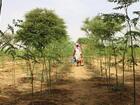
The Climate Technology Centre and Network (CTCN) is seeking proposals to provide technical support to Mali on the definition, selection, development and deployment of an
agrometeorological information system to improve crop management.
Deadline for applications: 5 May 2021, 17:00 (Vienna time)
Please see more information in the documents attached below.

The Climate Technology Centre and Network (CTCN) is looking for a Climate change mitigation and adaptation specialist, Latin America & Caribbean (LAC).
Deadline for applications: 14 April 2021
Location: Mexico City, Mexico
In this position, the specialist will provide services for the operationalization of the Climate Technology Centre and Network (CTCN), and will work in close coordination with the CTCN Director and the Regional Manager in the LAC region.

April 6th - 12 PM (GMT-5)

The Climate Technology Centre and Network (CTCN) organized two webinars to share early lessons from the first call for submission of applications to the Adaptation Fund Climate Innovation Accelerator (AFCIA) programme. The third webinar for Africa is planned later in May.

On February 11, the RCC St. George’s and Climate Technology Centre and Network (CTCN) co-organized an interactive webinar titled “Technical assistance for climate action in Caribbean countries – CTCN and AFCIA.” The CTCN is the operational arm of the UNFCCC Technology Mechanism, and is hosted by the UN Environment Programme (UNEP) and the UN Industrial Development Organization (UNIDO).

The transport sector contributes to the 28.4 % of total GHG emissions in Nigeria, the second largest contributor after the energy industries(40.7%). Among the six key transportation activities of road, rail, pipelines, water and air transport services, and post and courier services, the road transport takes up the most significant portion. The country has the largest road network in West Africa although still connection has not been perfect throughout the country.
