Luleå Airport is one of two pilot sites testing a new way to heavily reduce the carbon emissions. By using the district heating and cooling system for parked aircrafts, the airport’s electricity demand has dropped by 95 %. To supply the terminal building with energy, many airports have their own heating/cooling plant or are connected to a waterborne heating/cooling network. But what if the heating system could be connected to the airplanes as well, providing the energy needed to keep the aircraft warm and ventilated while they are parked?


As segregation and inequality are increasing in many parts of the world , inclusiveness in the planning process of cities and communities is becoming even more important. The city of Umeå in northern Sweden is working hard to create an inclusive, safe environment for all. <h2> The gendered landscape tour of Umeå </h2>

The city of Umeå is a pioneer in developing the sharing economy. The city has established test beds for a number of sharing services and digital solutions that lead to a more sustainable society. Across the globe, new business models are emerging that challenge traditional consumption patterns. The sharing economy is an important part of this, with the potential to significantly reduce both consumption and waste. Many businesses are embracing this development by introducing takeback systems that extend the lifetime of goods and resources by repairing them or reusing components.

Umeå is a fast-growing, environmentally conscious city in Northern Sweden that’s aiming to continue growing based on ecological, economic and social sustainability. The Smart Living Lab is a central hub for innovations and ideas to achieve this vision. Located 600 km north of Stockholm, Umeå is the 11th largest city in Sweden. It has a subarctic climate, with short and fairly warm summers, but long, freezing winters, which poses challenges for efficient energy use for both buildings and transport.

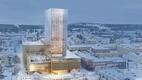
Sara Cultural Centre, one of the world’s tallest timber buildings, is located in Skellefteå, just below the artic circle in the north of Sweden. The building houses venues for arts, performances and meetings as well as a hotel, and has been constructed with the latest energy solutions. In 2021, the doors will open to a unique and dynamic meeting point combining culture and entertainment with conference facilities, directly connected to a new premium hotel, culinary experiences, a spa and a range of settings for events.

A major challenge for electric vehicles in northern Europe is adapting them to the cold climate to improve their operation, as well as their passenger and driver comfort. In Umeå, the company Hybricon has solved this problem with an advanced system for air heating and cooling. The technology, developed in Umeå, allows electric buses to run during very cold winter days as well as hot, sunny days, thanks to an advanced air heating and cooling system.

ReTuna Återbruksgalleria is the world’s first recycling mall, marking the start of a low-carbon shopping revolution. Old items are given new life through repair and upcycling. Everything sold is either recycled or reused, or has been produced organically or sustainably. The mall opened its doors in August 2015 and is located right next to the city’s recycling centre. This makes it easier for visitors to drop off unwanted and reusable items at the mall’s depot or ‘Returen’. Depot staff sort what is usable and what isn’t, and then distribute the retained items to the mall’s shops.

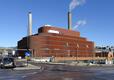
Värtahamnen harbour is home to Stockholm’s largest biofuel-powered combined heat and power (CHP) plant. The plant produces enough energy to heat approximately 190,000 average-size apartments. The combined heat and power plant at Värtahamnen, also known as or KVV8, was inaugurated in 2016 and produces heat and electricity through the combustion of solid biomass, consisting mainly of residuals from the forest product industry such as chips, branches and tops.

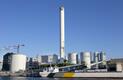
In the journey towards a carbon-negative energy production, Sweden’s first bioenergy carbon capture and storage pilot plant was commissioned in 2019. This project is a part of Stockholm’s target towards a positive carbon footprint by 2040. As early as 2018, the IPCC climate panel concluded that reducing CO2 emissions was not enough to meet the Paris agreement objectives. What was also needed, it said, was to cut the concentration of greenhouse gases in the atmosphere through ‘negative emissions’ or ‘carbon sinks’.

In central Stockholm, you find one of Europe’s largest district heating and cooling systems. Close to 90% of the city’s buildings are connected to the district heating network, which uses several innovative energy sources, such as excess heat and wastewater. Stockholm Exergi is responsible for heating and cooling production in the region of Stockholm.