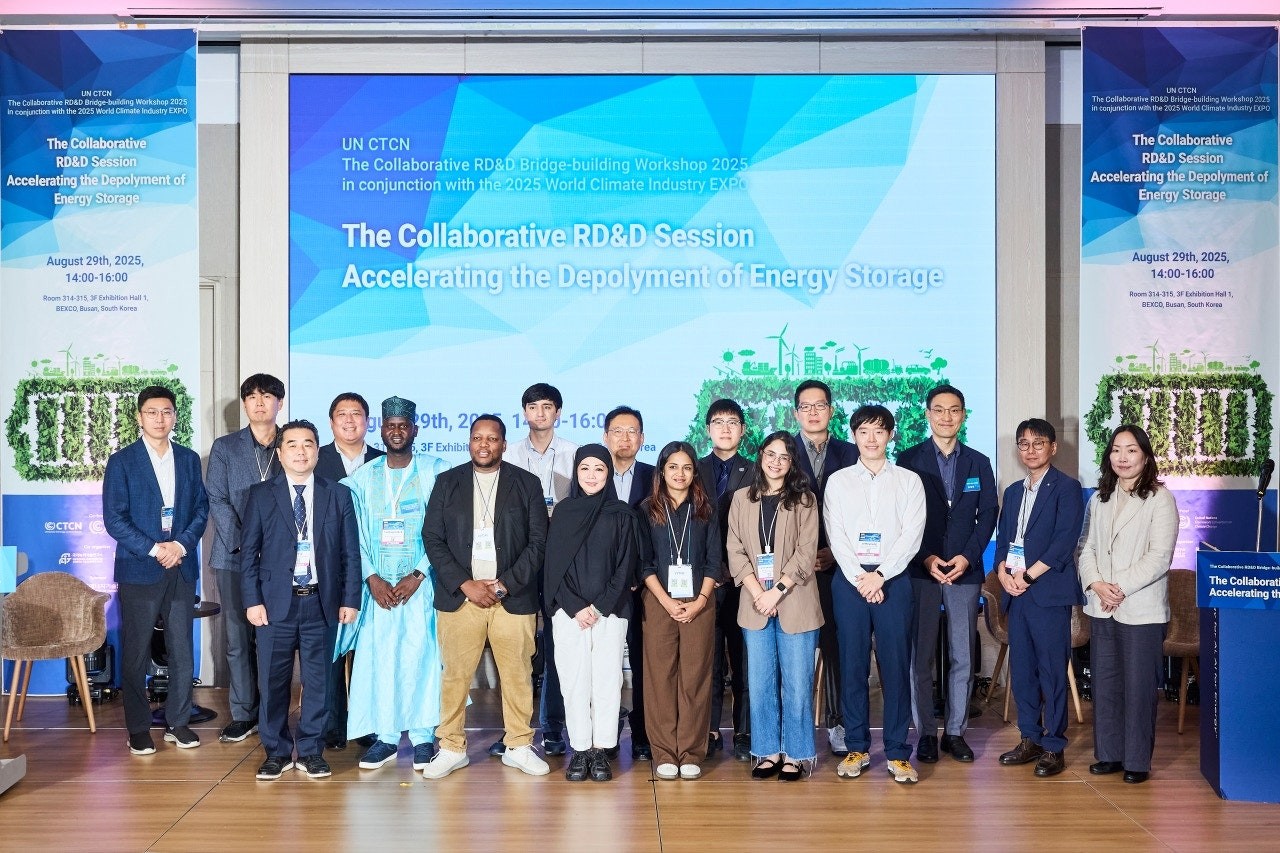
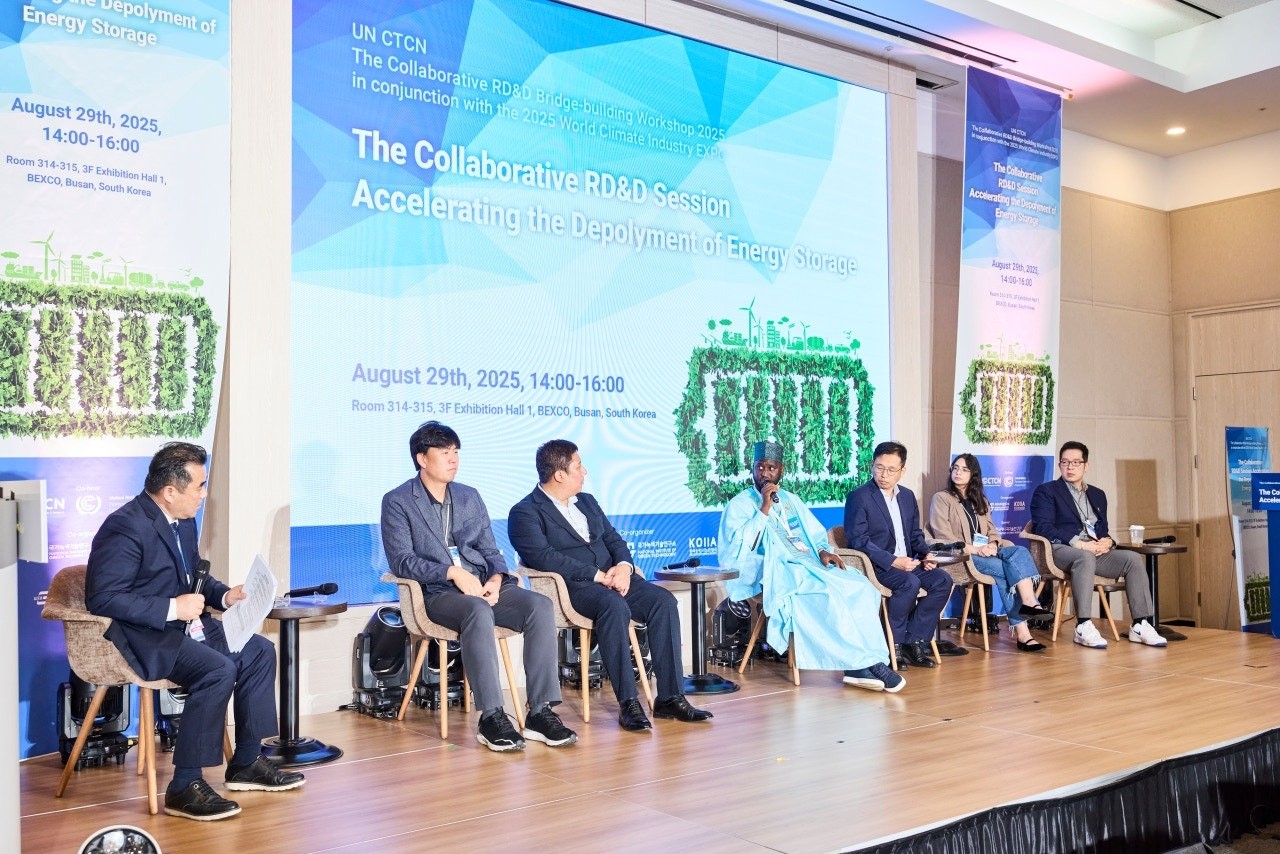
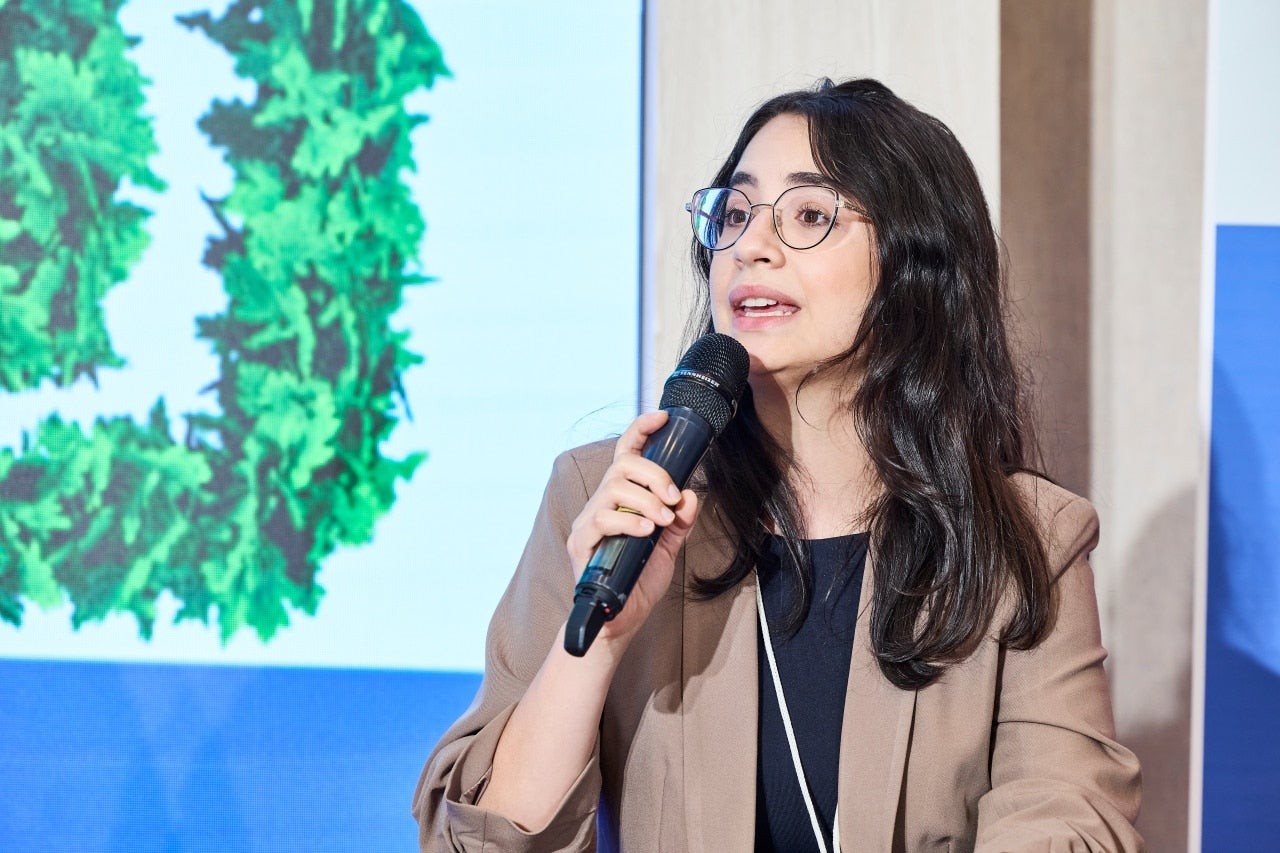
The UN CTCN and UNFCCC TEC co-organized a Collaborative RD&D Session on Accelerating the Deployment of Energy Storage to Advance Clean Energy Transitions in collaboration with the Korea Institute of Energy Research (KIER) and National Institute of Green Technology. The main objective was to introduce the TEC's work on the deployment of energy storage to advance clean energy transitions, and to share ongoing projects and policy research activities on energy storage systems.
It took place on the margins of the CTCN Collaborative RD&D Bridge-Building (CRD2B2) Workshop.
Energy storage is key in achieving the Paris Agreement’s goals, by enabling the large-scale use of renewable energy and as an enabler of clean energy transitions. Energy storage directly contributes to mitigation by reducing reliance on fossil fuels, enhancing grid stability, and ensuring a reliable supply of low-emissions power. It also strengthens adaptation efforts by improving energy resilience, supporting decentralized power systems, and safeguarding communities against climate induced disruptions.
Below is a blog on the main take-aways of the event:
From Lab to Society: Scaling Climate Innovation and Energy Storage for a Sustainable Future
Two major climate technology events held recently in Asia highlighted both the urgency and the opportunity for accelerating innovation: the launch of the Asia Climate Tech Startup Partnership and the UNFCCC Technology Mechanism’s Collaborative RD&D Session on Energy Storage. Together, they underscored how partnerships, policy, and technology transfer are coming together to deliver solutions that can help meet the Paris Agreement goals and strengthen resilience in vulnerable countries.
Launching the Asia Climate Tech Startup Partnership
At the CMKF–GIH Global Climate Tech Partnership Conference (10:00–12:30), the Hyundai Motor Chung Mong-Koo Foundation (CMKF), the Global Industry Hub (GIH), and RMI Third Derivative announced the creation of the Asia Climate Tech Startup Partnership. Guided by the slogan “Lab to Society toward Climate Solutions”, the initiative is built on three pillars:
-
Catalyze: Bringing climate innovations from research to market to reduce carbon emissions.
-
Leverage: Mobilizing platforms to support climate tech innovation.
-
Collaborate: Fostering global networks through knowledge-sharing and collective action.
The conference brought together domestic and international voices, including Sambou Kinteh, National Designated Entity (NDE) of The Gambia, who delivered a keynote on climate challenges and technology needs in his country. He described Gambia’s high agricultural dependence, food security risks after the worst rainy season in 2024, and pressing needs for renewable energy, clean cooking, drought-resistant crops, irrigation technologies, and coastal protection.
From the CTCN Secretariat, Woojin Han participated in a panel on startup development, highlighting CTCN’s Youth Climate Innovation Programme as a pathway to nurture new generations of climate technology entrepreneurs. This contribution marked an important step in strengthening collaboration between CTCN and CMKF.
Accelerating Energy Storage Deployment
Later in the day, the UNFCCC Technology Mechanism convened a Collaborative RD&D Session on Accelerating the Deployment of Energy Storage (14:00–16:10). Co-hosted by the TEC and CTCN and supported by CMKF, NIGT, KOIIA, and KIER, the session showcased how energy storage can enable large-scale renewable integration, stabilize grids, and strengthen resilience.
Stephen Minas, CTCN Advisory Board Chair, emphasized that energy systems are a priority transformation area in the CTCN’s 2023–2027 Programme of Work. Dietram Oppelt, TEC Chair, highlighted the dual mitigation and adaptation benefits of energy storage—from reducing fossil fuel reliance to protecting communities against climate disruptions.
The session featured diverse success stories:
-
Papua New Guinea: A CTCN-supported pre-feasibility study on ocean energy.
-
Honduras: PV-ESS microgrid solutions scaled from pre-feasibility to implementation.
-
Korea: Microgrid RD&D in Jeju Island and Antarctic applications.
-
Panama: Developing regulatory frameworks and innovative financial models for ESS.
-
Gambia: Plans for 23 MW of solar power with 8 MW of storage under World Bank projects.
Across these examples, a common message emerged: successful deployment requires more than just technology. It needs integrated approaches combining policy, finance, local capacity, and business models to ensure long-term sustainability and impact.
Building Momentum
From startups in Asia to grid solutions in Africa and Latin America, these events showcased how partnerships are helping to connect research with real-world needs. By scaling locally-led innovations and accelerating deployment of enabling technologies like energy storage, initiatives like AFCIA, CMKF, and the UNFCCC Technology Mechanism are laying the groundwork for a more resilient and sustainable future.
|
CTCN Woojin Han.jpg
|
Sambou Kinteh, Gambia.jpg
|
Participants
- CTCN Secretariat
- UNFCCC Secretariat
- NDEs from Asia-Pacific, Africa, and the LAC regions
- Malaysia, Maldives, Mongolia, Tajikistan, Timor-Leste (AP) Gambia, Zimbabwe (AF), Panama (LAC)
- Researchers and international cooperation staff from KIER and NIGT
- Public and other stakeholders participating in WCE2025