News facts
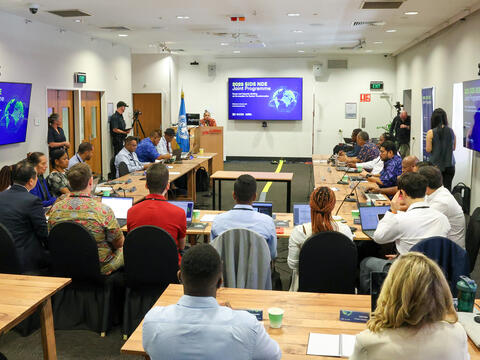
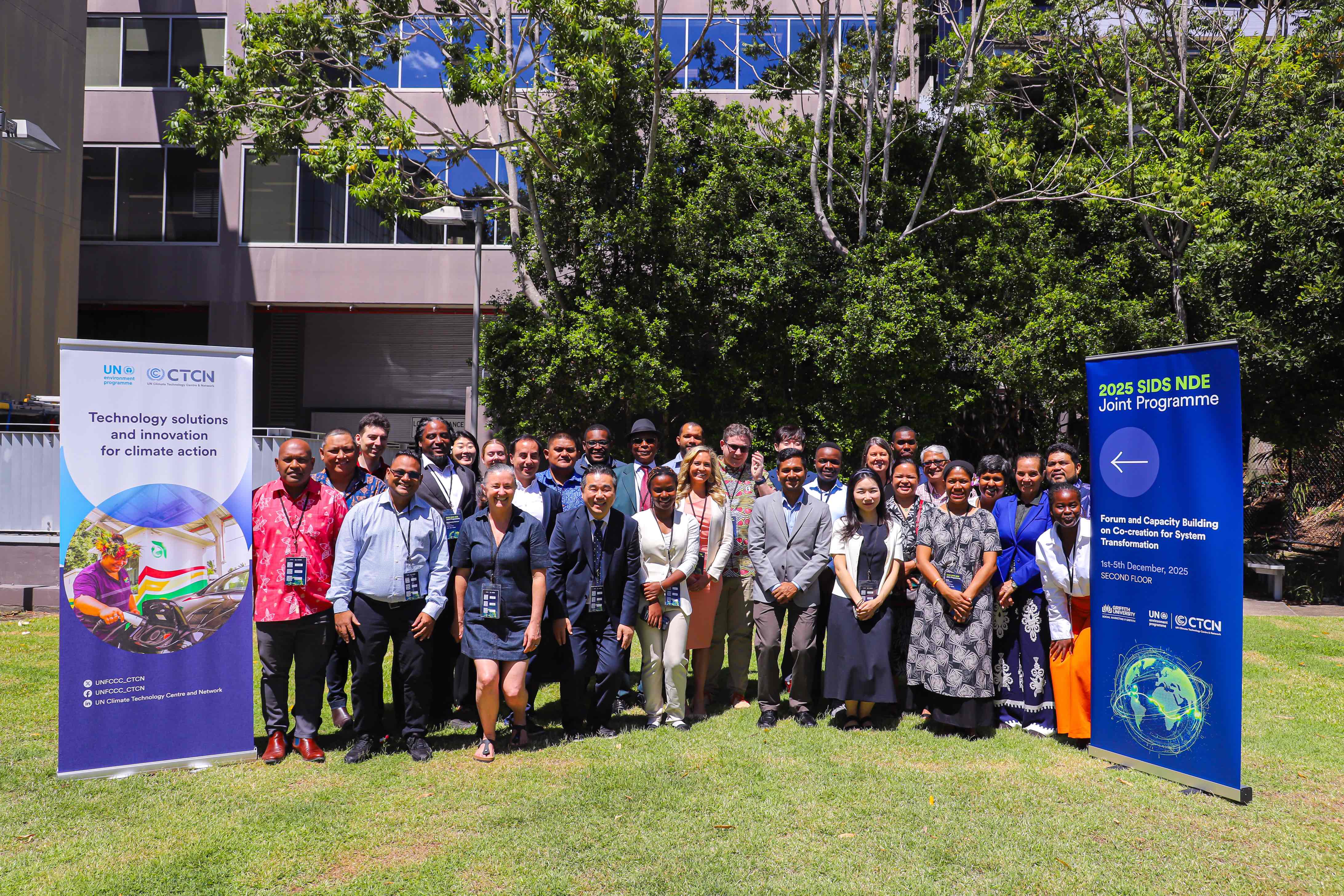
Brisbane, Australia, December 1, 2025 – About 15 representatives from small island nations now have access to practical tools, capacity building opportunities, and collaborative platforms as the first-ever Small Island Developing States (SIDS) Forum for NDE convenes in Brisbane, Australia, from 1–5 December 2025.
The event brings together National Designated Entities (NDEs) and key climate technology contacts from the Pacific, Caribbean, Africa, and Asia to exchange experiences, showcase innovations, and explore new ways to advance climate-resilient, low-emission development.
Hosted by the UN Climate Technology Centre and Network (CTCN) and Griffith University, the Forum focuses on strengthening partnerships, scaling up the adoption of climate technologies, and improving access to funding while aligning national efforts with global climate goals.
Through interactive sessions, participants learned to co-design solutions, apply behavioural science principles, and drive system transformation, equipping them with skills to enhance the uptake of climate technologies in their countries.
A highlight of the joint programme was the capacity building sessions, which introduced participants to the Co-create, Build, Engage (CBE) methodology, social impact mapping, stakeholder engagement, and participatory design techniques. These sessions provided practical tools to measure social and environmental impacts, segment target audiences, and design behaviour-change interventions that are both effective and inclusive. Participants explored real-world case studies, applied frameworks such as the COM-B behaviour change model and the Technology Adoption Model, and gained hands-on experience in co-designing locally relevant solutions.
Opening the Forum, Ariesta Ningrum, Director of the CTCN, noted: "This Forum is a platform to share experiences – linking CTCN technical assistance to NDCs, TNAs, and finance windows. It also builds the skills needed to co-design, justify, and advance high-quality, community-anchored technology projects."
Echoing the same sentiments, CTCN Advisory Board Vice Chair, Christian Lohberger, emphasized that “Countries need solutions that are realistic for them to implement. The innovation process should consider local levels of financial and technical capacity so that outcomes are sustainable, equitable, and resilient. This workshop will provide attendees with strategic insights and programming advice for more SIDS-friendly outcomes.”
Professor Sharyn Rundle-Thiele, founding director at Griffith University Social Marketing @ Griffith, added on the importance of these approaches: "We will look at how behavioural science can enhance the adoption and uptake of climate technologies to benefit all. The forum demonstrates how collaborative and inclusive approaches such as co-design, behavioural science, and systems methods can help drive long-term, sustainable change that directly benefits small island nations."
The Forum will conclude with site visits to local initiatives on the Sunshine Coast, including Turtle Care, which focuses on conservation efforts around light pollution and turtle habitats, and Blue Heart, an innovative flood management system guided by the Sunshine Coast Council. These visits will provide participants with real-world examples of climate solutions in practice, reinforcing the lessons learned during the five-day programme.
About the CTCN:
Established by Parties to the UNFCCC, the CTCN supports developing countries in accessing and deploying climate technologies based on national priorities. With over a decade of experience, it has connected nearly 1,000 Network members and supported more than 115 countries through technical assistance, capacity building, and knowledge sharing. The SIDS Forum highlights how collaboration, co-creation, and practical learning can empower small island nations to accelerate climate action and build resilient futures.