News facts
The UN Climate Technology Centre and Network (CTCN) is helping developing countries tackle a critical blind spot in the energy transition: the world’s most potent greenhouse gas, hidden inside the electricity grids being expanded to power a cleaner future.
Sulphur hexafluoride (SF6), widely used in medium- and high-voltage equipment, has a global warming potentially 24,300 times that of carbon dioxide over 100 years. As electrification and renewable energy drive grid expansion, continued installation of SF6-containing equipment risks locking in emission for decades. Yet solutions exist for better SF6 management and a complete replacement with SF6-free solutions. Kenya and Senegal’s pioneering efforts supported by CTCN took centre stage at the COP31 side event “The blind spot of the energy transition; SF6 in power grids”. The event, which took place on 18 November, attracted policymakers, utilities, and technical experts, highlighted how their expertise on tackling SF6 could help other developing countries curb emissions as they expand and modernize their electricity networks.
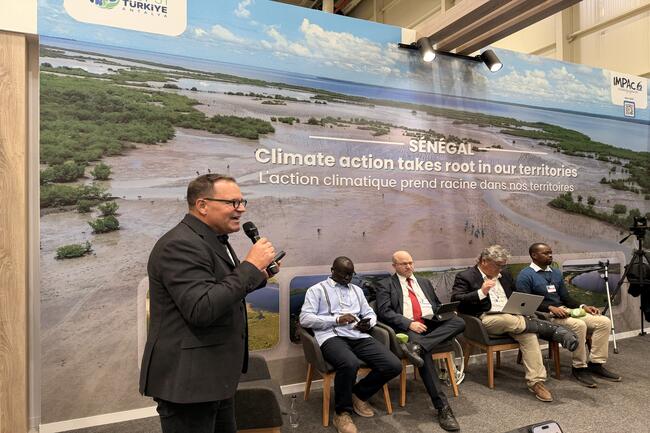
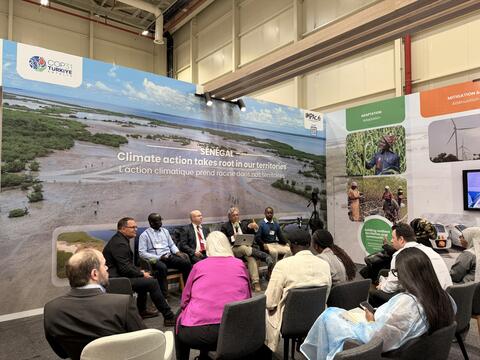
COP31 side event on SF6 at the Senegal Pavilion, November 2026, Türkiye
Technical assistance turns ambition into action
CTCN’s pioneering projects in Kenya and Senegal, the first of their kind on the African continent, are helping their governments and utilities establish the data baseline, skills and planning needed to tackle SF6-related emissions. Their experiences offer a model for countries facing similar challenges.
“Expanding electricity access and building cleaner grids must go hand in hand,” said Ariesta Ningrum, Director of CTCN. “Our technical assistance helps countries understand where SF6 is installed, strengthen the skills to manage it safely and identify alternatives suited to their grids. Kenya and Senegal are showing what country-led action can achieve.”
In Senegal, national electricity utility Senelec is emerging as an African leader in addressing SF6. The CTCN technical assistance, with in-kind support from Germany’s National Designated Entity (NDE) and in collaboration with Enda Energie, is enabling Senelec to better manage SF6 emissions and identify pathways to adopt SF6-free equipment. The project has consolidated an inventory identifying approximately 24 tons of installed SF6. Work includes improved monitoring and technical guidance, assessment of alternatives and financing options, and a transition roadmap covering both existing equipment and future procurement. A planned SF6-free pilot will test technology under local conditions and train Senelec teams.
“Reducing SF₆ emissions is an environmental priority for Senelec, given the gas’s significant impact on the climate. Through this initiative, we reaffirm our commitment to improving SF₆ management, promoting more sustainable alternative technologies, and strengthening our contribution to the fight against climate change. Technical cooperation, capacity building, and knowledge sharing are essential to accelerating this transition towards a more environmentally friendly electricity sector,” said El Hadji Ndiogou DIOP, Chef du Département Qualité Sécurité et Environnement (QSE), Senelec.
In 2024-2025, the government of Kenya has already taken important steps through CTCN assistance requested by its Ministry of Energy and Petroleum. The EU-funded work established the country’s first national SF6 inventory, identifying approximately 20 tons of SF6 installed, and trained 71 technicians and staff from 12 institutions. It also developed monitoring and safe-handling guidance, and a draft phase-out roadmap requiring further consultation.
Kenya is now increasing its’ ambitions. Additional EU funding announced on 10 November will support an SF6- free pilot installation, helping move technical assistance towards deployment in the country. Kenya is also the first developing country to endorse the SF6 Pledge.
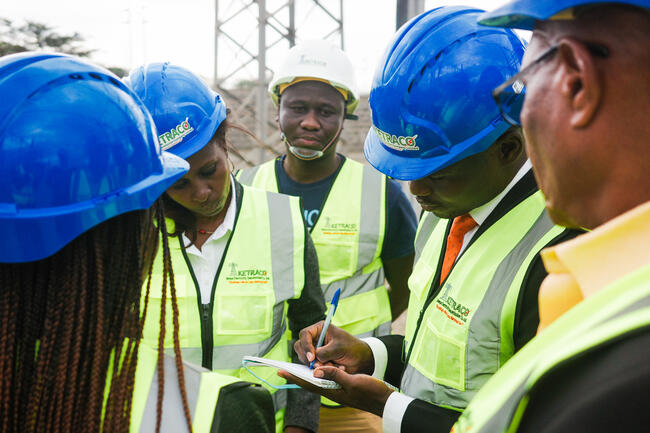
Visit of the Athi River Substation operated by KETRACO, September 2024, Kenya
From national experience to global cooperation
The COP31 event connected these country experiences with discussions around the policy, financing and technical support needed to scale action, while advancing electrification and renewable energy.
Since 2026, the CTCN has been part of the Global SF6 Initiative alongside Deutsche Gesellschaft fur International Zusammenarbeit (GIZ) Gmbh and the World Bank, linking national technical assistance with wider international cooperation. The next milestone comes tomorrow (Thursday, 19 November 2026) at the launch of the Global SF6 Pledge, led by the German Government at COP31.
Governments, utilities, technology providers, and financing partners must now translate growing momentum into stronger emissions tracking, safer gas management, and investment in SF6 free equipment before today’s grid expansion locks in tomorrow’s emissions.
Also visit the SF6 Knowledge Hub of the CTCN.