News facts
March 23-26, 2026, Hammamet, Tunisia – Over 40 policymakers and climate technology leaders from across Africa gather this week to strengthen national systems and fast-track climate technology solutions for resilience and access.
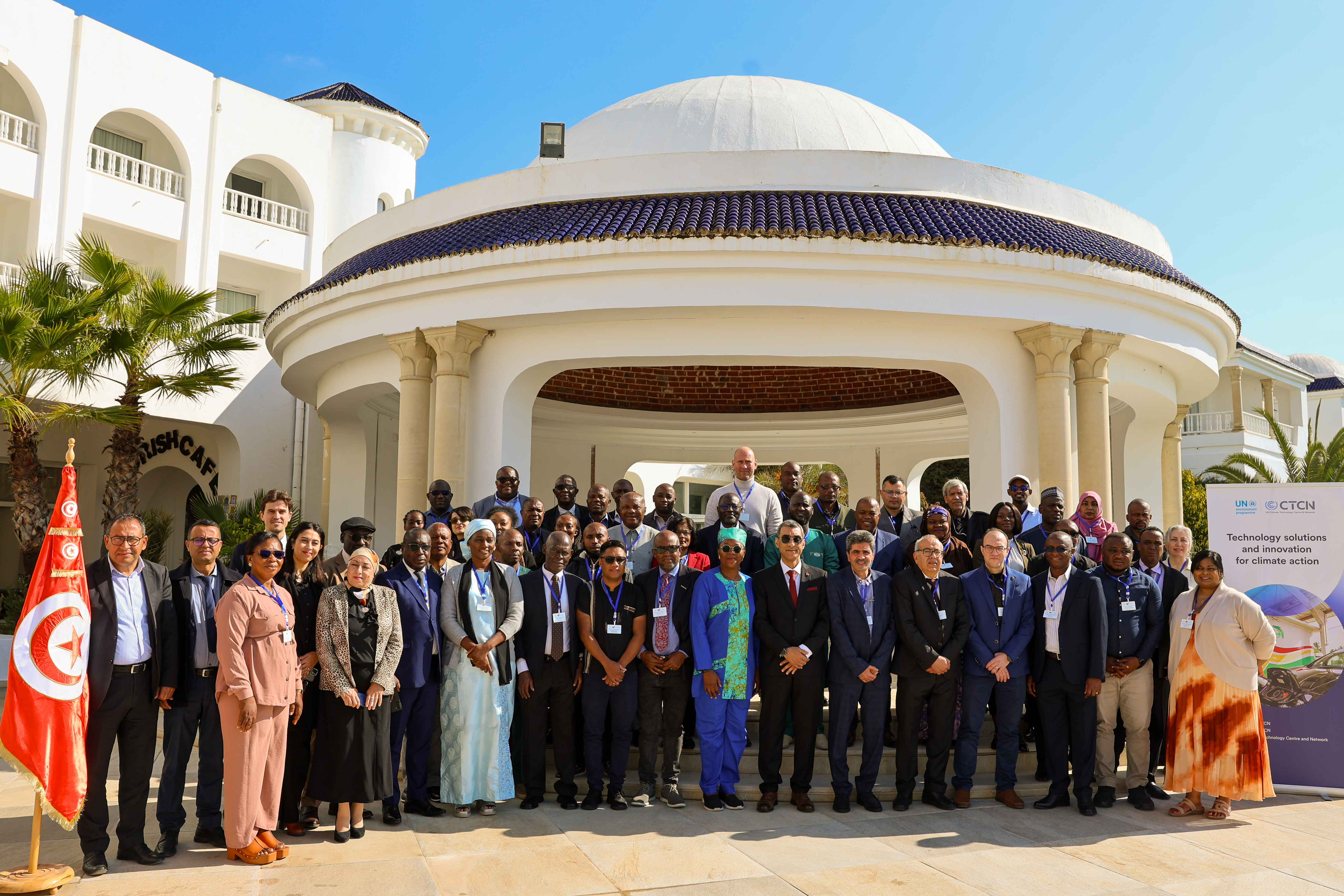
Over the course of four days, participants will strengthen regional collaboration, sharpen national project pipelines, and advance practical pathways to scale climate technologies that improve resilience, access, and livelihoods across the continent.
The Forum convenes annually and brings together National Designated Entities (NDEs), relevant UNFCCC bodies, development partners, and innovators to move beyond project-by-project support toward coordinated, system-level impact. Participants will hear about hands-on tools to align climate technologies with Nationally Determined Contributions (NDCs), Technology Needs Assessments (TNAs), and investment opportunities that, in turn, will help build their capacity to translate policy priorities into fundable, implementable projects.
The 2026 forum’s edition reflects that urgency, with a clear focus on system transformation through National Systems of Innovation (NSI) and responds to growing demand from countries to connect technology deployment with institutions, finance, skills, and digital tools, including AI, so impact can be sustained long after individual projects end.
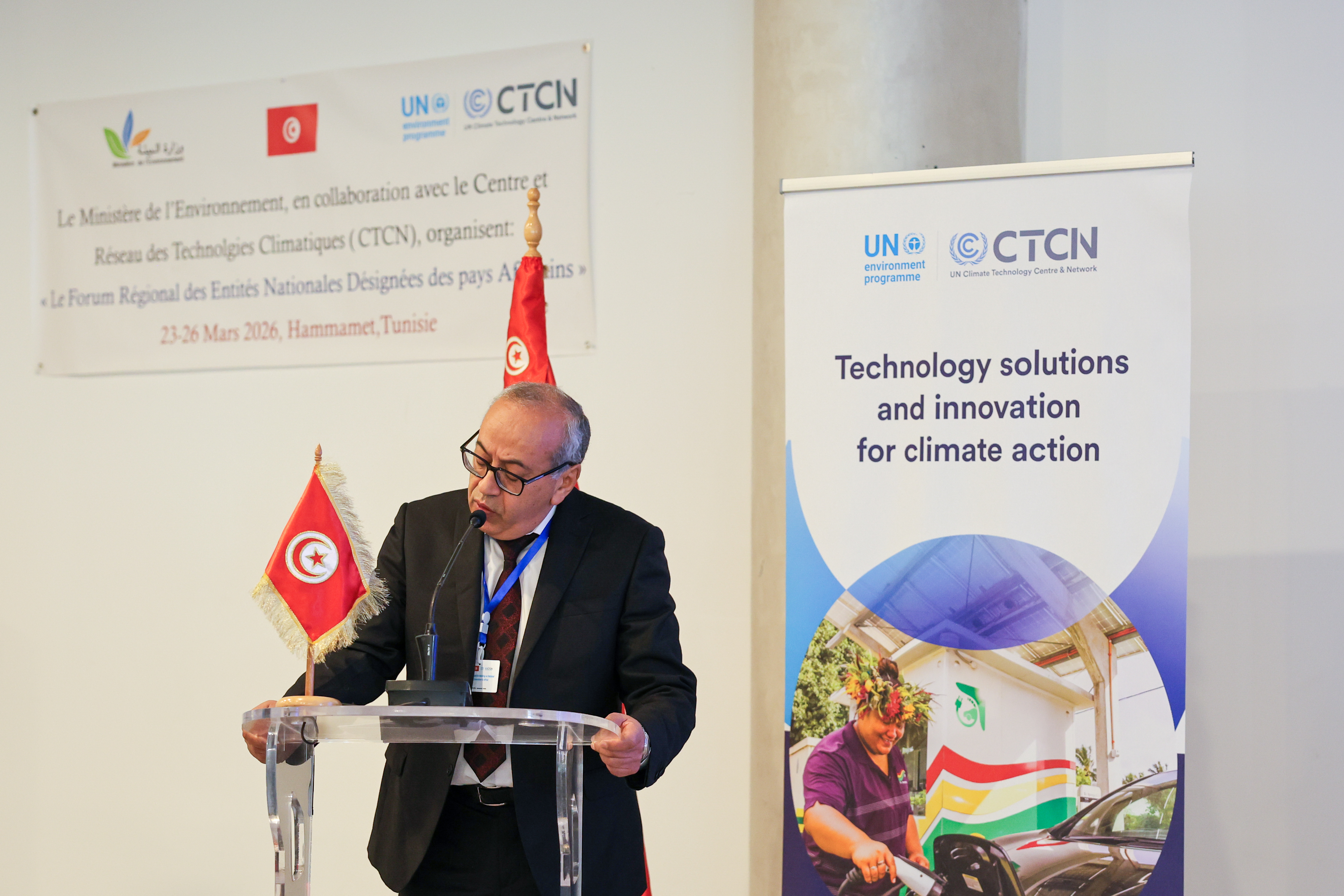
Opening the Forum, Tunisia’s Director-General for Sustainable Development at the Department for the Environment of the Ministry of Environment, Mosbah Abaza, framed the moment as a regional inflection point. By hosting the Forum, “Tunisia is happy to position itself as a connector which links African priorities with global climate technology cooperation.” He noted that the Forum helps shape a shared agenda where countries “move together, not alone,” reinforcing Tunisia’s role as an anchor for climate technology cooperation.
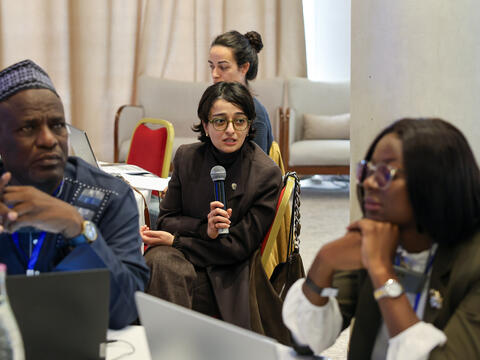
Throughout this week’s programme, discussions will zero in on experience gained to-date and what system transformation looks like in practice. NDEs will be invited to exchange lessons on building strong national pipelines, mainstreaming gender and inclusion, and strengthening post-implementation monitoring to demonstrate real-world impact.
The recently introduced World Café sessions will explore transformation across the water–energy–food nexus, buildings, energy systems, business and industry, and sustainable mobility, the areas where coordinated change can unlock both resilience and economic opportunity.
These conversations matter far beyond the region. Africa’s climate technology priorities, ranging from climate-smart agriculture and renewable energy to digital solutions for service delivery, mirror global challenges of scaling clean technologies equitably. As participants highlight, success in Africa offers replicable models for other developing regions navigating similar transitions.
As is customary with the previous years, the Forum is held alongside a region-tailored capacity-building programme, with this year’s focus being on National Systems of Innovation for Climate Resilience and Access. As part of this, a dedicated Network Fair and bilateral meetings will further connect countries with solution providers, turning dialogue into actionable agreemnts and partnerships.
The Forum also marked a milestone year for the Climate Technology Centre and Network itself.
Ariesta Ningrum, Director of the CTCN, reflects on 2026 as a “historic year” for the CTCN, with its third independent review ongoing and new functions being rolled out. “These changes”, she emphasized, “will deepen engagement with NDEs and expand the CTCN’s role across the full technology cycle from enabling environments to deployment and diffusion, signalling a more responsive, demand-driven phase of support.”
The final day helps translate theory into action. Through peer learning, case studies, and project design exercises, NDEs will map how innovation systems – incubators, accelerators, finance, policy, and data – can work together to deliver climate resilience and access at scale.
While the Forum will conclude this Thursday with one message remaining clear: Africa is ready to lead on climate system transformation, and through collective action, the NDEs are already shaping solutions with global relevance.
About CTCN:
Established by Parties to the UNFCCC, the CTCN supports developing countries in accessing and deploying climate technologies based on national priorities. With over a decade of experience, it has connected nearly 1,000 Network members and supported more than 115 countries through technical assistance, capacity building, and knowledge sharing.
For more information, please contact [email protected]