News facts
As climate fallout intensifies, Colombian coastal community supports the planting of mangroves to protect livelihoods
On Colombia’s remote Pacific coast, the village of Cuerval rises on stilts above the tides. Here, between water and land, mangroves stretch their tangled roots deep into the mud and fan their branches over winding estuaries that are home to 128 bird species. For the people living here, the mangroves are a shield against sea and storms, a source of food and shelter and a cradle of marine life that sustains their livelihoods.

Mangroves are a haven for the fish that underpin Colombia’s coastal economy. Credit: UN CTCN/Miranda Rikki Tasker
This vital yet vulnerable ecosystem is weakening. In the last 40 years, Colombia has lost 14 per cent of its mangroves, nearly 50,000 hectares. In Cauca Department, where Cuerval lies, the coast is being scarred by deforestation, illegal logging, gold mining, pollution and climate-driven erosion. Unsustainable practices make the damage worse: petroleum poured into the mud to extract clams poisons the ecosystem, fishing encroaches on protected areas and coconut plantations creep ever closer to the shore.
“Without their protection, everything hits us harder,” says Yolanda Garcés Ortiz, speaking of the mangroves.
Recalling one recent storm, she adds: “The wind tore the roof right off. My kids were screaming [...] and when we stood outside and saw the house completely uncovered, we didn’t know what to do. Climate change is coming, and we are witnessing it.”
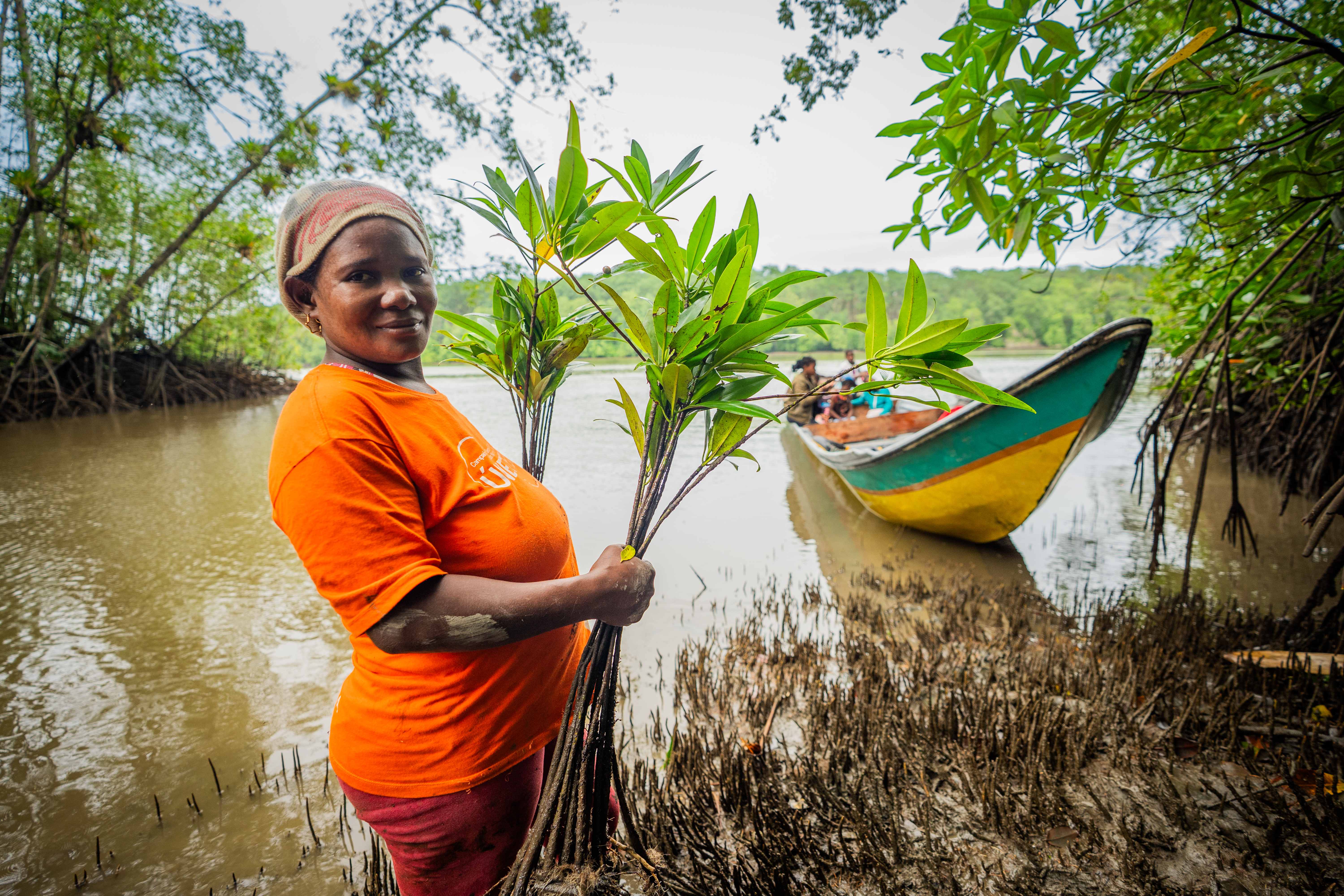
For Garcés, who has harvested clams all her life, the mangroves are survival. “When I don’t have money to feed my kids, I go out, gather clams, sell them, and that’s how I feed my kids and myself. It’s my source of income. For us, the mangrove is life!”

Mangroves are home to an array of marine life. Credit: UN CTCN/Miranda Rikki Tasker
Faced with these threats, the people of Cuerval joined with the UN’s Climate Technology Centre and Network and the Regional Autonomous Corporation of Cauca to launch Cuerval Sostenible (Sustainable Cuerval). The initiative has a dual focus: restoring ecosystems and strengthening communities, to build resilience and foster peace in a region increasingly defined by climate stress.
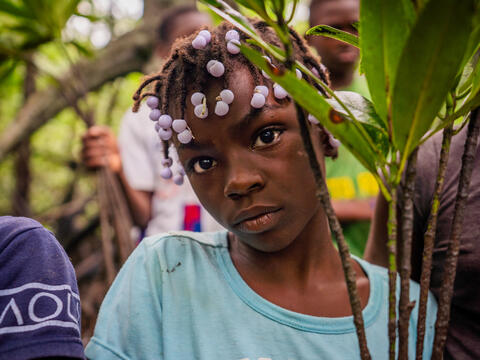
Cuerval Sostenible is working with adults and youth, uniting the local communities to restore the mangroves. Together they plant mangrove seedlings in degraded areas, clear invasive plants and reopen blocked channels so tidal waters can return.
These efforts build on ancestral practices like rotating patches, harvesting from one area while leaving others to recover, now reinforced by modern innovations such as drones, satellite mapping and community-led monitoring.

The Cuerval Sostenible programme is helping communities plant mangrove seedlings in degraded areas and clear invasive plants. Credit: UN CTCN/Miranda Rikki Tasker
The technology has given residents a sharper understanding of their territory, showing where mangroves are thinning, where waters no longer flow, and where harvesting weighs too heavily. This foresight makes it easier to keep use and renewal in balance so the mangroves endure for generations to come.
By analyzing conserved, restored and degraded forests, local residents say they are gaining the means to act decisively and adapt to the shifting tides of climate change.
“We’re planting trees so the ecosystem holds up, and that will allow us have more mangroves over time for our kids and future generations,” says Gilma Marina Angulo of the Corporation of Cauca. “The project helps because our economy depends on the mangrove.”
The El Cuerval Community Council collectively manages over 2,700 hectares of mangroves. Restoration is done by community members themselves.
 Mangroves are among the world’s most powerful carbon sinks, storing more carbon per hectare than many terrestrial forests. Credit: UN CTCN/Miranda Rikki Tasker
Women, the main clam harvesters, are central. Their traditional rules – only taking mature clams, leaving the young to repopulate – are key to sustainability. By valuing women’s leadership and knowledge, the project is strengthening both their voice and the mangroves’ future, says Gilma.
“Our women are really shy and with the project, I’ve noticed they’re more expressive, more confident.” says Gilma. “That’s really important, because we’re the ones holding up the family, the home, and our ecosystems.”
By bringing back the mangroves, the project reduces the competition and conflicts that flare when resources run scarce. United under the community council, people now set fair rules and monitor the forest together, turning it into common rather than contested ground.
“With the project, they’ve realized it’s a super important ecosystem, not just for us but for the whole world,” Gilma says.

Innovations such as drones and satellite mapping are helping communities track the recovery of mangroves. Credit: UN CTCN/Miranda Rikki Tasker
Mangroves are among the world’s most important carbon sinks, storing more carbon per hectare than many terrestrial forests. Protecting them helps Colombia, which is aiming to restore 18,000 hectares of ecosystems by 2030, meet its climate goals. They also cool the air, anchor sediments, and filter pollutants, like fertilizer runoff, before they reach coral reefs and seagrass beds. Their reach extends far beyond Colombia’s Pacific coast, sustaining biodiversity and bolstering climate resilience across both land and sea.
The work in Cuerval is inspiring interest in other councils along Colombia’s Pacific coast.
 Technology has given residents a sharper understanding of their territory, showing where mangroves are thinning and where harvesting weighs too heavily. Credit: UN CTCN/Miranda Rikki Tasker
As fisherman Diego Alfredo Vélez Cortés puts it: “When there’s no mangrove, everything falls apart, and families start suffering. With this project, my family will live happier. It’s like a treasure that’s going to stay for them.”
Garcés, the clam harvester, says that change is already happening. “We are witnessing the recovery of our mangroves, of our territory, of our lives.”