News facts
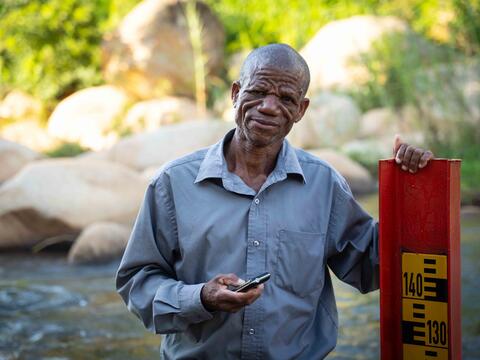
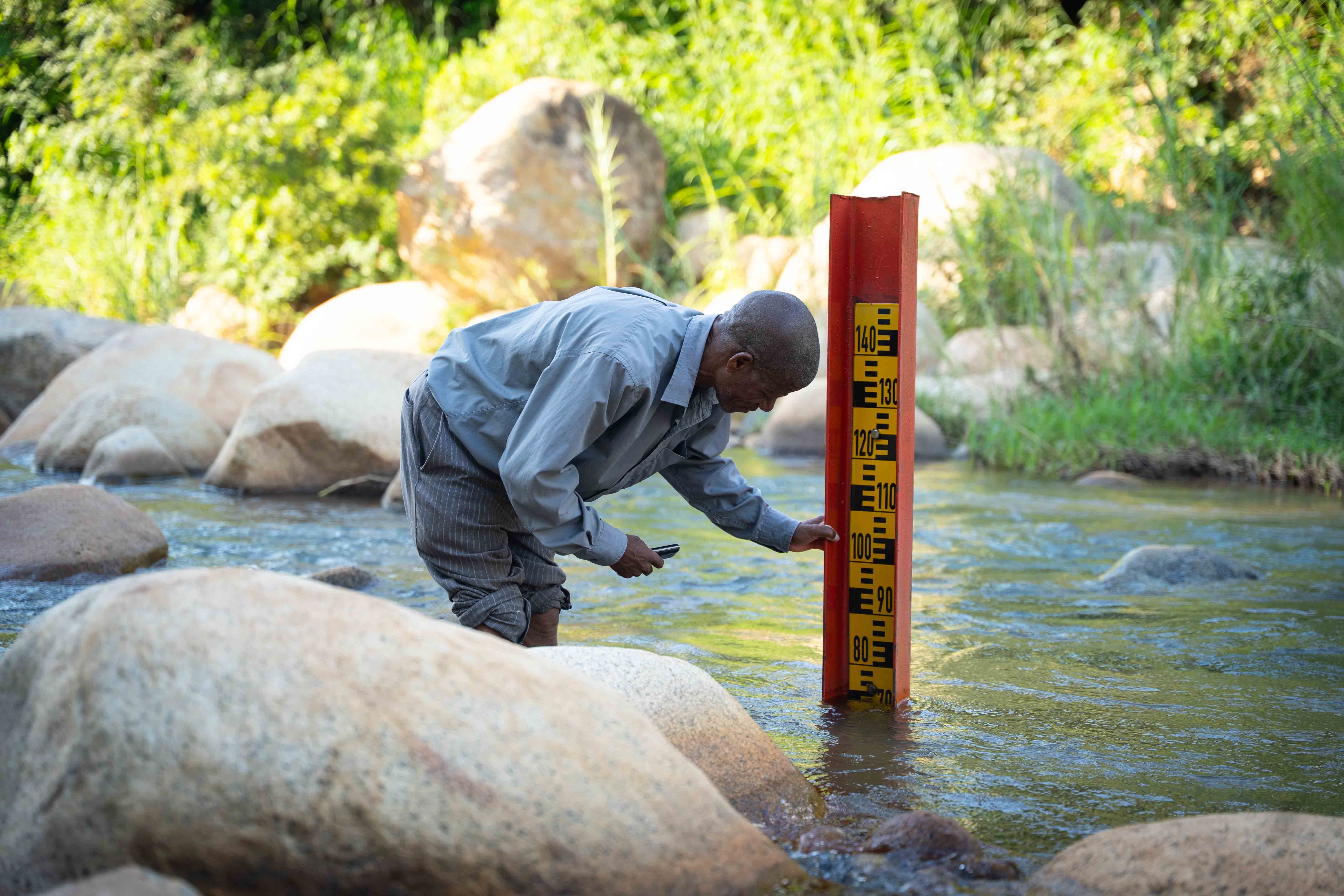
As the sun went down, Stephen rolls up his trousers and wades into the clear waters of the Phalombe River, which drains from the grey cliffs of Mount Mulanje in southern Malawi.
Picking his way over the rocks, he reaches a metal gauge fixed into the riverbed - a giant ruler measuring the water's depth – and notes the level on his mobile phone.
A few taps later and the reading was sent, via SMS, to the Department of Water Resources (DWR) and Department Climate Change and Meteorological Services (DCCMS).
This simple act, which he has repeated twice a day for three decades, is Stephen’s small but vital contribution to Malawi’s growing climate database, used to guide early warning systems and inform the government’s disaster response.
Until last year, however, his crucial observations would be committed to paper, and collected by government officials at the end of the month.
This delayed and fragmented system made the data cumbersome and unwieldy for decision-makers and climate forecasters to use effectively in a nation increasingly vulnerable to extreme weather.
“In the past, the main problem was that there was no systematic means of maintaining weather records,” explains Amos Mtonya, Deputy Director of the DCCMS. “There was a huge delay in the access to data, especially in the forecasting office.”
This data gap wasn't just an institutional challenge; it had devastating real-world consequences.
For Stephen, the lack of timely warnings hit tragically close to home.
Sitting on the concrete step outside his modest two-bedroom house, Stephen pulls out his phone. He pauses as the tiny screen displayed a grainy photograph of his mother’s old identity card, his only image of her.
Just over two years ago, Cyclone Freddy – one of the longest-lasting tropical cyclones ever recorded – unleashed its devastating fury upon Malawi.
“We always remember Cyclone Freddy in our family because of what the cyclone did to us,” Stephen says.
The Phalombe River, swollen with floodwater, snatched his mother as she crossed back home from visiting her other son, and swept her downstream.
“If there had been an opportunity like we have today where information is shared in real time during disasters’, he says, reflecting on the tragedy, ‘she might have been saved.”
Stephen's loss highlights the immense risks faced by nations on the frontline of climate change, such as Malawi.
Over 80 per cent of its population relies on rain-fed agriculture, making them highly susceptible to the intensifying floods, droughts, and unpredictable weather patterns that have caused hundreds of millions of dollars in damage and displaced thousands.
The 2016 drought alone cost Malawi around USD 200 million in crop production.
“For Malawi, climate change is real,” says Mtonya. “If it's not heavy rains damaging crops, then it'll be a drought or prolonged dry spells. And now we’re being hit on almost a yearly basis; before we’ve recovered from one climate disaster, another hits.”
Now, thanks to a UN Climate Technology Centre and Network (UN CTCN) project backed by the Adaptation Fund and implemented by Water Insight and the DCCMS, the opportunity for timely and accurate warnings is beginning to take shape.
Stephen and more than 100 other local rainfall and water observers across Malawi have been equipped and trained to digitize their observations.
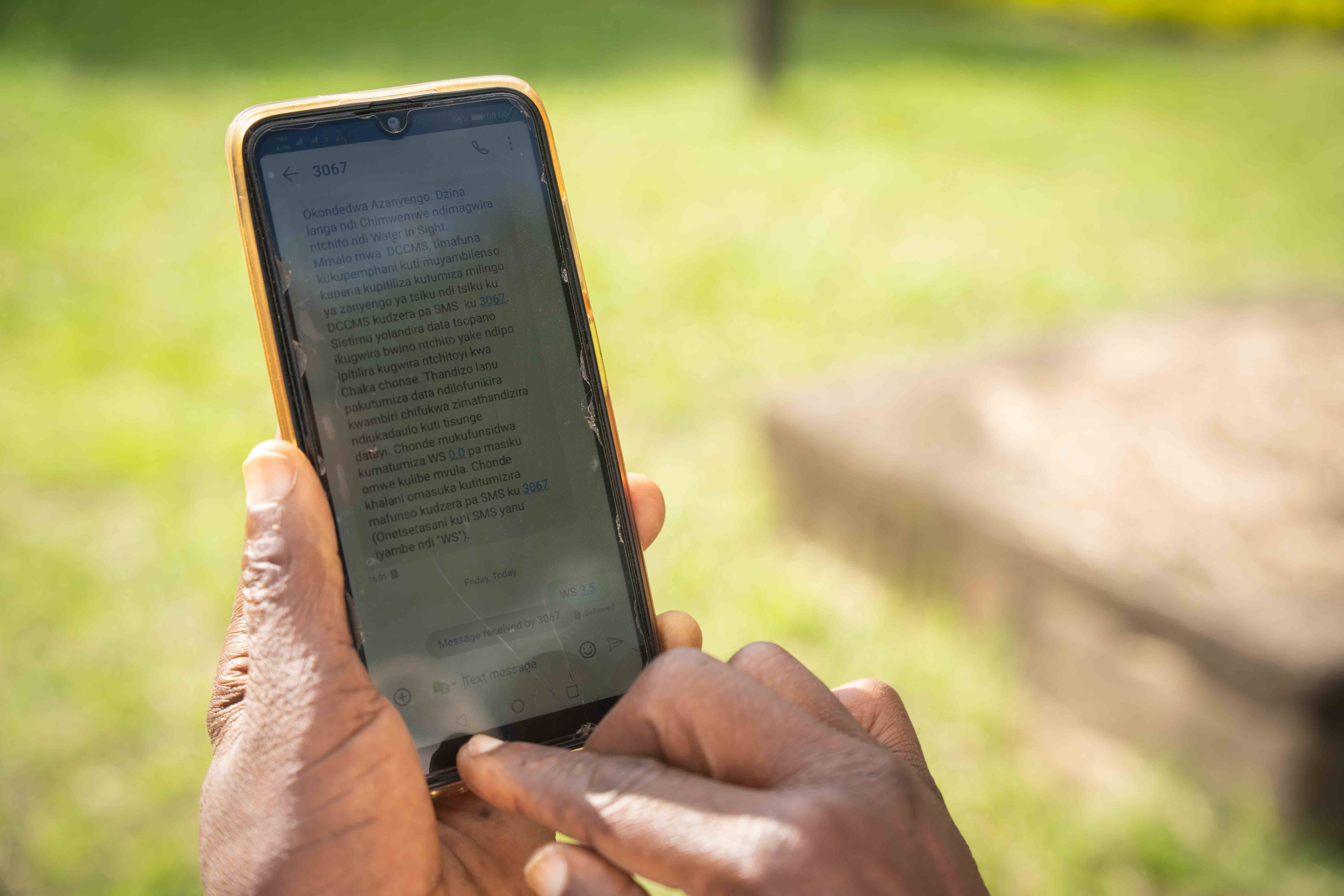
After sending daily readings via free SMS, their data is collated instantly into a national online platform called Blue IQ, resolving the issue of fragmented information, and using Artificial Intelligence to provide the government agencies with near real-time data presented on an easy-to-use interface.
“Getting data in near real-time is transformative,” says Mtonya. “It sharpens our long-term forecasts, but more crucially, it enables us to identify vulnerable areas quickly and position aid effectively – ultimately, helping us save lives.”
The improved flow of data not only helps to give communities critical time to prepare and evacuate, or plan when to plant and harvest crops, but also feeds into regional and global weather forecasting models, improving their accuracy.
A cyclone warning, for example, allows farmers to harvest what they can from their field before the crop is destroyed by the storm.
The next stage of the project uses Artificial Intelligence to analyse the combination of Stephen’s readings with satellite data to create climate and flood hazard forecasting models that helps the country adapt.
“No one takes the warnings lightly—this is helping them to protect themselves,” Stephen says.
Malawi's situation highlights a broader challenge across the continent.
While Africa has contributed negligibly to the changing climate, with just about two to three percent of global emissions, it faces severe impacts, often hampered by a less dense climate data infrastructure compared to regions like Europe and North America.
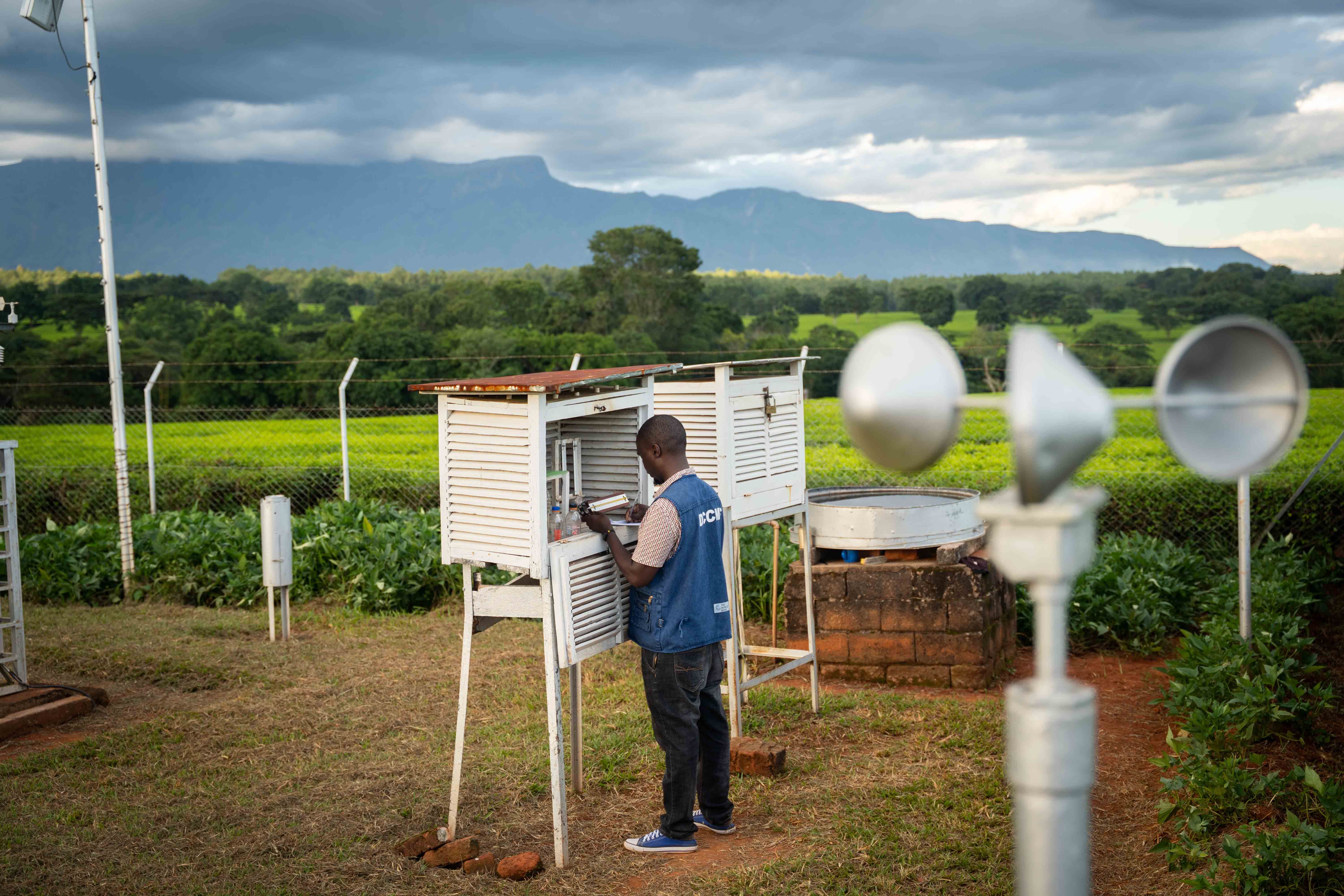
Recognizing that sophisticated hydro-meteorological systems are expensive and prone to disrepair, this project focuses on practical, robust solutions. It uses low cost, simple water and rainfall monitoring devices that are easier to maintain. It has rehabilitated over 50 broken monitoring stations across two regions of Malawi.
"Investing in early warning systems represents one of the most cost-effective climate adaptation strategies available, often yielding returns up to tenfold on the initial investment," explains Ariesta Ningrum, UN CTCN’s Director.
“What this project demonstrates is that robust climate data doesn't always require complex, expensive infrastructure. By utilizing simple, affordable tools like SMS messaging, cloud computing and AI, and focusing on maintainable monitoring equipment, we've established a highly effective and scalable approach to generating the vital information needed for adaptation planning and saving lives," she adds.
“I love my job very much,” Stephen said. “What I love about it, is that it protects people’s lives.”