News facts
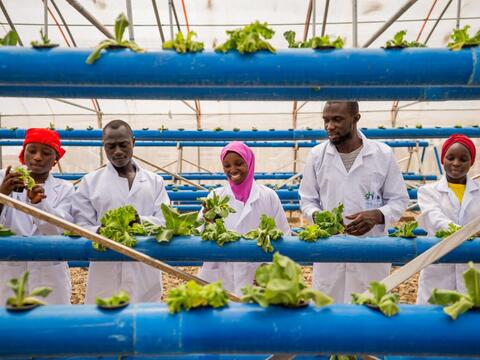
In the heat of northern Nigeria’s drylands, an agricultural transition is underway. A greenhouse is providing food and safety where parched soil and rising competition for arable land and water are fueling tensions between farmers, nomadic herders and armed groups like Boko Haram. Using no soil and a fraction of the water, solar-powered greenhouses now nurture lush rows of lettuce, tomatoes, cucumbers, and peppers in a place where, until recently, nothing grew.
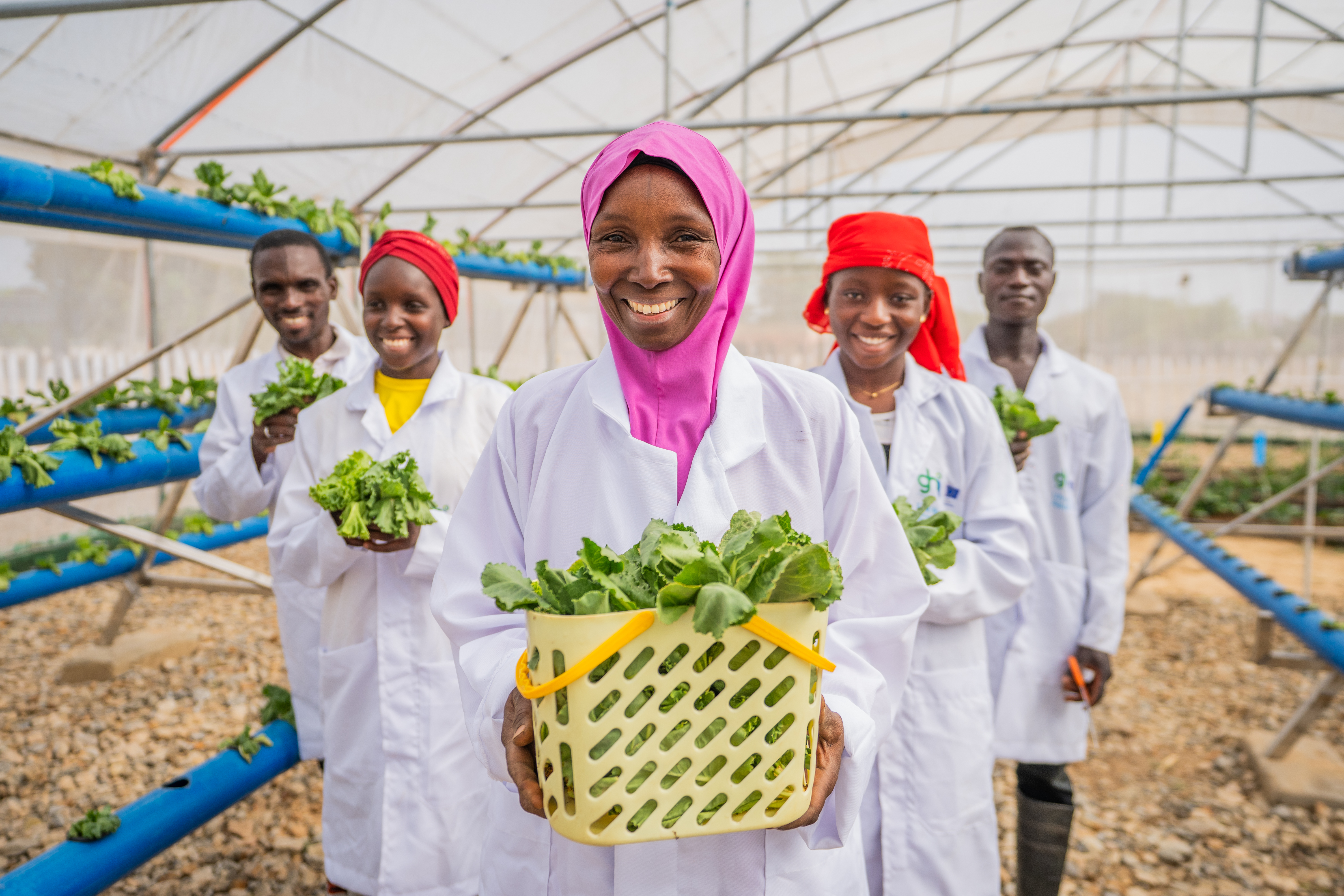
Photo credit: UN CTCN/Miranda Rikki Tasker
This small-scale hydroponics pilot aims to transform how local communities grow food in Kaduna State, one of Nigeria’s regions hardest hit by climate pressures and insecurity. It is supported by the UN Climate Technology Centre and Network (CTCN) in partnership with the Green Habitat Initiative.
Conflict has displaced farmers and disrupted food production, leaving behind a trail of fear, especially for women farmers. “Each time I cultivate, the crops are eaten up by the cattles, and each time I go and we fight,” said Agera Teman Liti of the Small-Scale Women Farmers Organisation of Nigeria (SWOFON). “And I felt my life was endangered so I stopped.”
Evangeline Edeh, one of the project’s beneficiary farmers, puts it plainly: “When the crops failed due to the drought, we were left with no option but to rely on the kindness of our community members for food assistance. The feeling of helplessness was overwhelming, and it was a harsh reminder of the vulnerability of our rural community to climate change.”
Today, on the fringe of Kubau town stands a greenhouse on dry cracked earth, contrasting with vibrant green crops growing inside, not in soil, but in water and air, defying the harsh conditions.
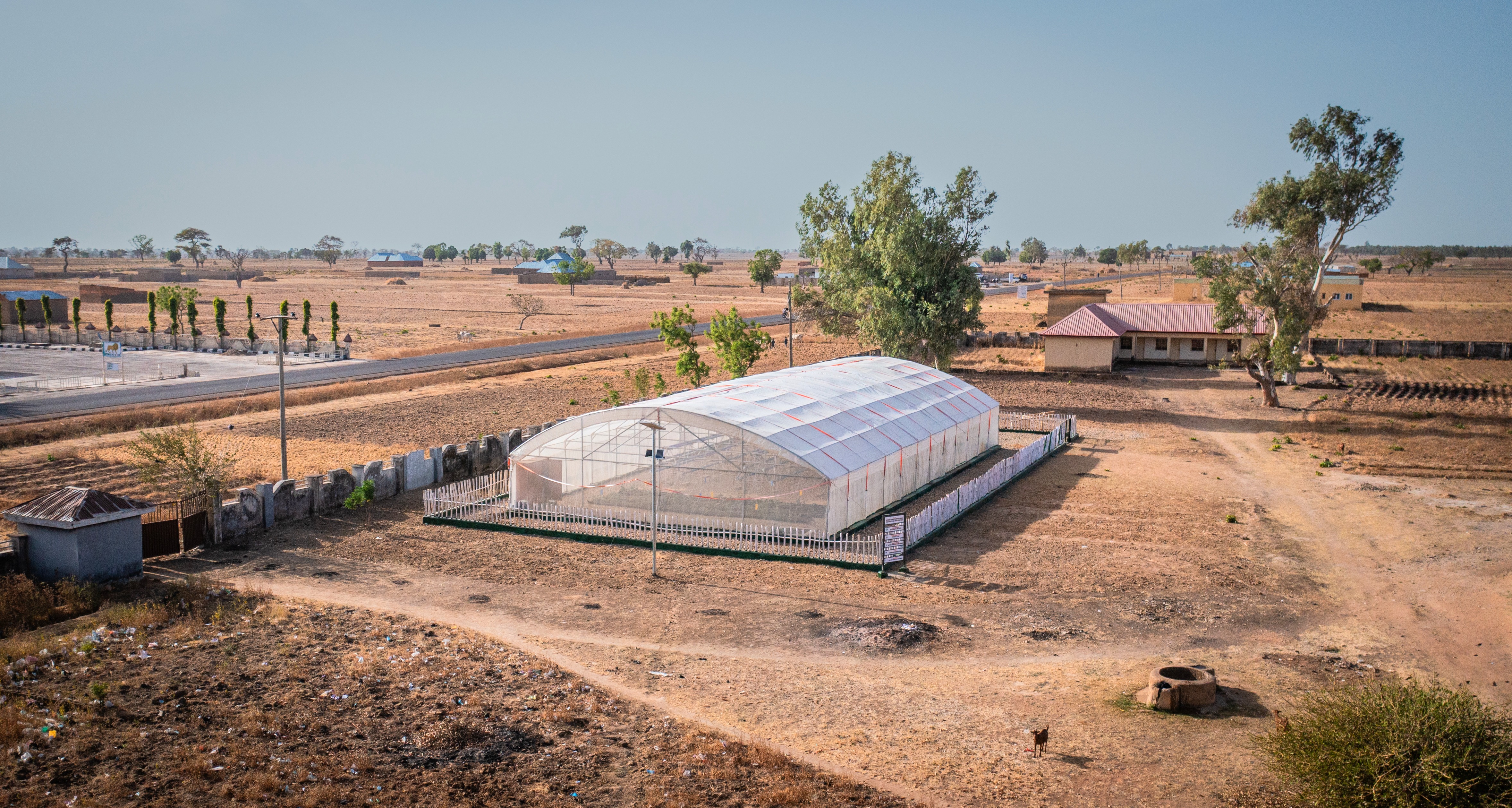
Photo credit: UN CTCN/Miranda Rikki Tasker
This small-scale hydroponic farm is an innovative, closed-loop system where nutrient-rich water circulates through pipes, trays, and troughs, powered by solar pumps humming steadily in the background. The design maximizes vertical space, with water flowing through tubes across multiple levels, supporting 1,000 plants in layered arrangements on just 150 square meters, less than half the area typically required in traditional farming.
In the trough system, designed for heavy-fruiting vegetables, a gravity-fed drip method delivers water with precision, nourishing each seedling with minimal waste. Plants are rooted in Nigerian coco peat and rice husk, a locally sourced byproduct of Kubau, that absorbs water and nutrients efficiently. Vertical trellising allows plants to climb strings suspended from the greenhouse roof, further optimising space. Thanks to the enclosed environment, crops suffer less from pests and infections, reducing the need for pesticides.
By removing the need for large plots of arable land, hydroponics reduces competition over shrinking natural resources, a key driver of conflict. With food now grown in enclosed, compact and controlled environments, the risk of land disputes, crop destruction from cattle, and violent encounters diminishes significantly.
Over the past 20 years, nearly all the power cables leading to Kubau have been cut or vandalised, leaving electricity poles tilting along the roadside and loose wires dangling in the wind. Because the project is solar-powered and energy-independent, the system remains resilient amid the collapse of the power grid.
“You can harvest close to 9 to 10 times in a year,” explained Kassim Abdullahib, a hydroponics expert supporting the project. “Whereas in an open farm you can do it only twice in a year. Sometimes when you plant outside and there may be drought, you begin to look for water […] But here there is nothing like drought because you control the temperature, you control the environment, you control the nutrients.”
For the first time ever, lettuce has been grown in commercial quantities in the region.
Built within the outskirts of town, the facility provides fresh vegetables and also protection. Women no longer need to walk for hours through unsafe terrain to tend to distant farms.
“Before the Hydroponics project, we used to farm over there, far away. There were kidnappers,” said Hajiya Suwaiba Musa. ”People are afraid. But with the coming of hydroponics, we thank God, you don’t have to go deep into the bush to farm. We can produce food within the safety of our compound. [...] In the screen-house behind me, I’ve started my nursery, planting tomatoes and lettuce.”
In many rural communities, farming has long come with the risk of violence and assault. But now, with hands-on training in hydroponics, women are moving agriculture into the safety of their own backyards, growing food without fear.
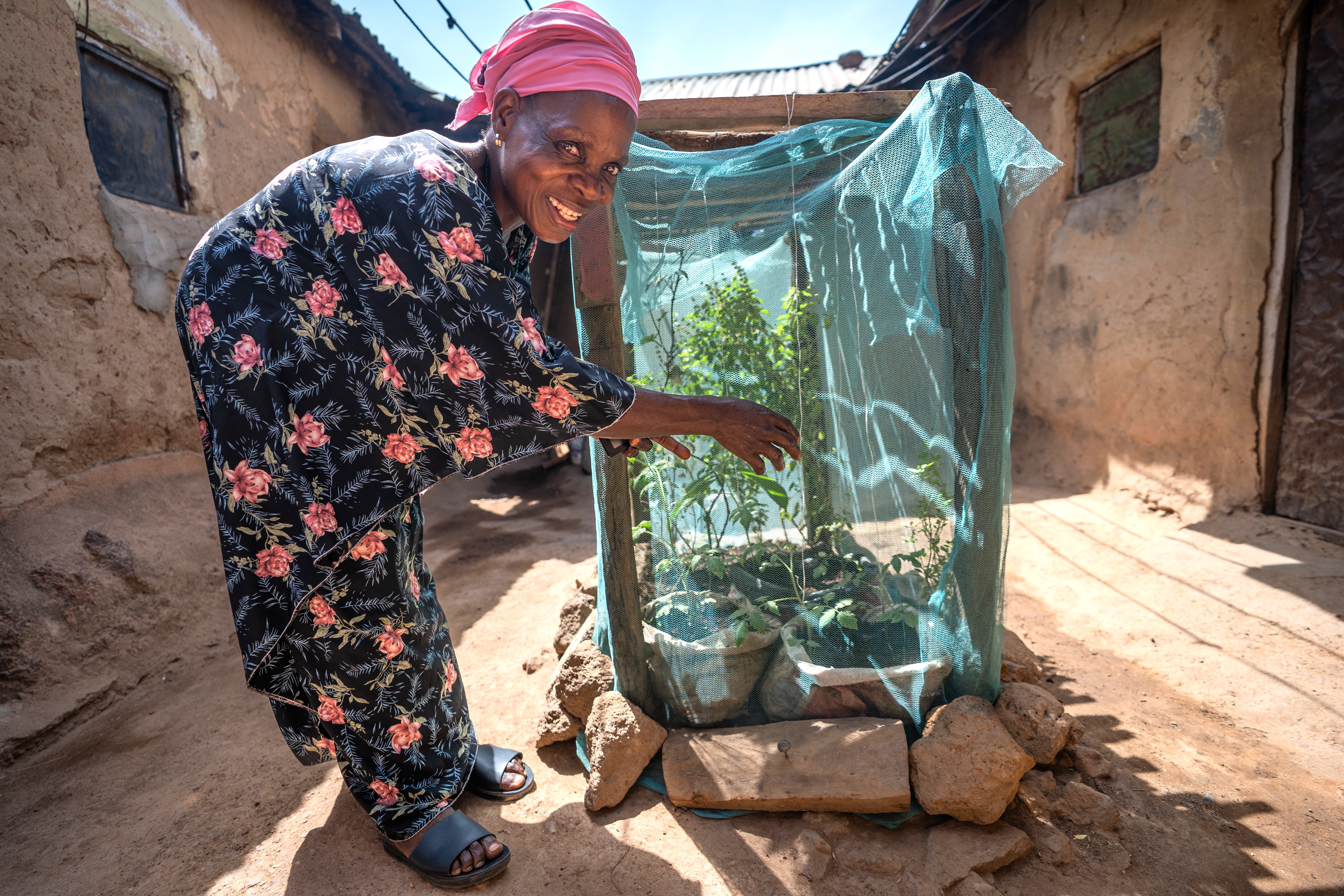
Photo credit: UN CTCN/Miranda Rikki Tasker
“I learned how to make fodder from the hydroponics training,” said Hassana Hamisu as she stands with a plate of sprouting grains, feeding her chickens in her backyard. “This fodder serves as an alternative to chicken feed, and is much cheaper.”
Edeh explains the ripple effect of the initiative. “I have noticed a growing interest among women who initially weren't part of the project. When we started practising it at home, we saw people coming to check it out, and even calling me “mama-hydroponics”, she says chuckling, “which is a testament to the impact this project has had.”
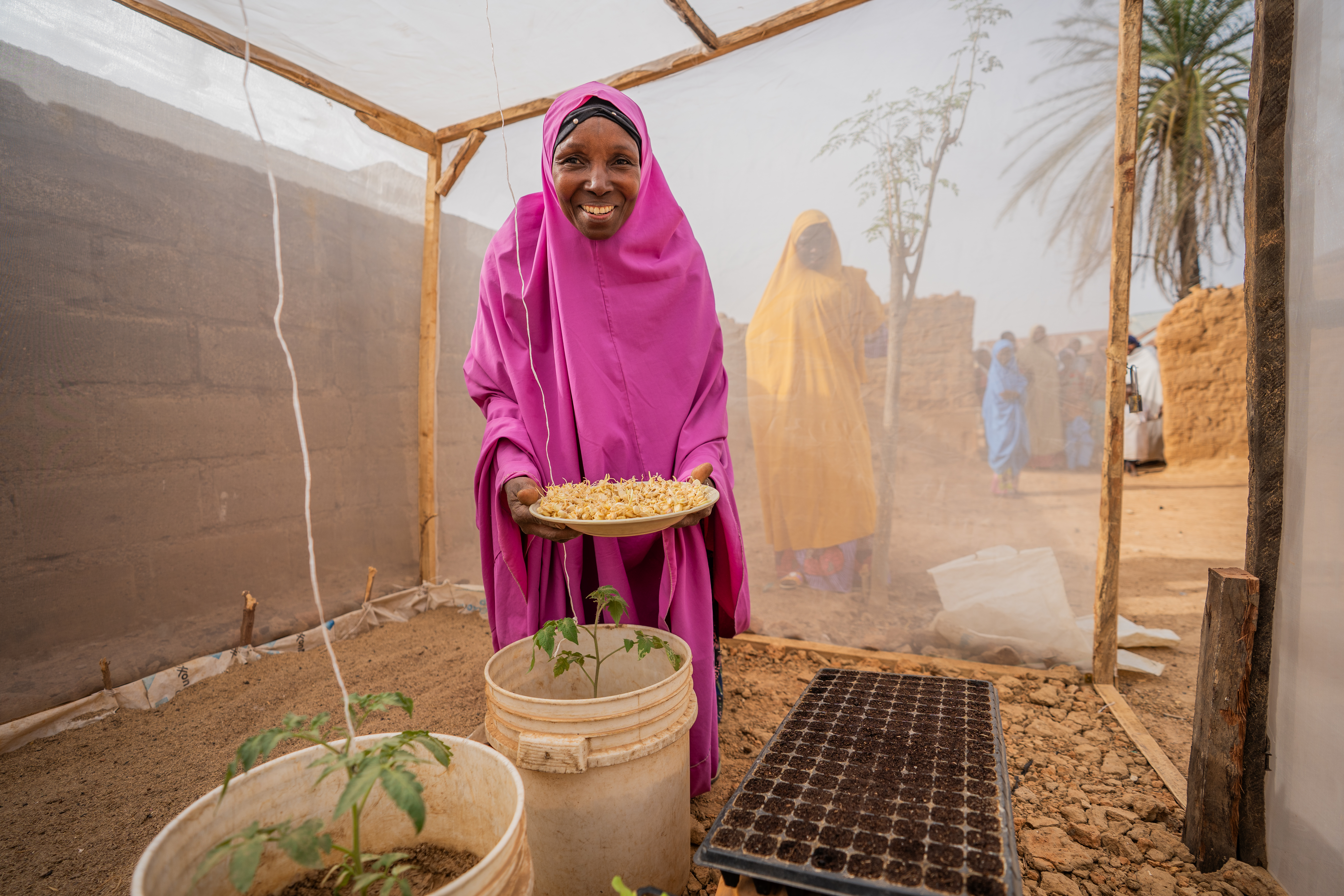
Photo credit: UN CTCN/Miranda Rikki Tasker
And local artisans are being trained to construct simple greenhouses and hydroponic systems, so as to replicate them across the village in a low-cost way.
Nigeria’s food systems are under increasing pressure. In 2023, the Federal Ministry of Environment declared a state of emergency on food security. Despite its vast agricultural potential, Nigeria faced a trade deficit exceeding ₦1.000 trillion (over $700 million USD) in agricultural goods that year, its fifth consecutive year of imports exceeding exports. With more than 25 million people at risk of acute food insecurity, innovations like hydroponics offer a chance to break the cycle. (Source: Nairametrics)
“Hydroponic farming is going to increase the resilience of the woman farmer,” noted Agera Teman Liti. “She doesn’t have to go far, with the insecurity we have in Nigeria. The small space she has within her home that is secured will enable her to produce a lot in the home. So for me and for smallholder women farmers, it’s a welcome idea.”
The long-term goal is to ensure food security at the household level, but also to build a foundation for economic empowerment and local food sovereignty. “We need to share the results of the project, and for the project to scale up to ensure that we are not just producing food for the homes but also to look at it in terms of commercial agriculture,” Agera Teman Liti added. “Instead of importation we can produce all that we need.”
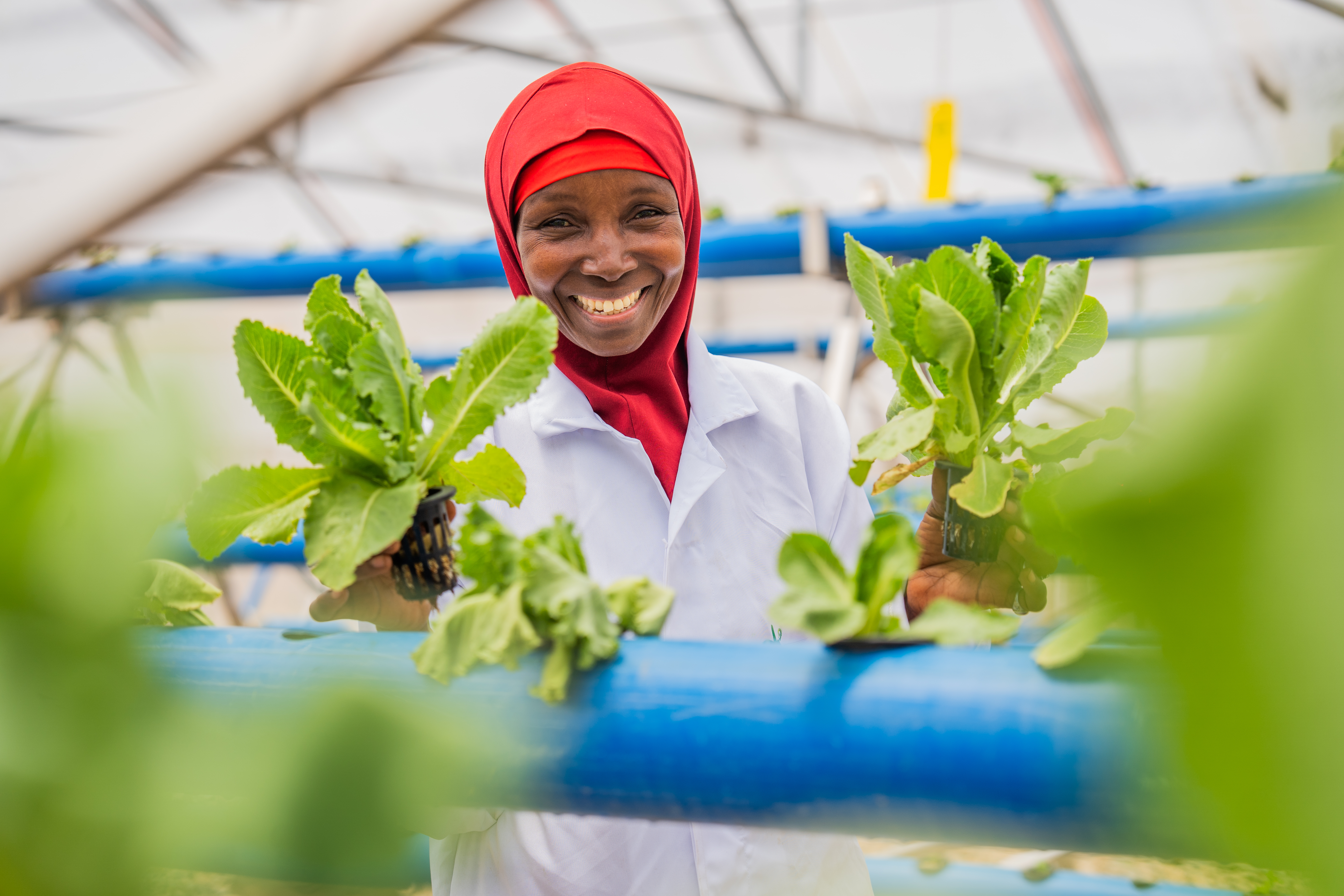
Photo credit: UN CTCN/Miranda Rikki Tasker
In a landscape ravaged by deforestation, climate change and armed groups like Boko Haram, women who long feared for their safety and faced failed yields are beginning to cultivate vegetables again, and, more radically, to build autonomy and peace. Though this sustainable alternative to traditional rain-fed farming, hydroponics is helping communities build resilience amid drought and conflict.
And in Kaduna, it’s women who are leading the way, proving that even in the harshest conditions, peace can grow when nurtured with care and fueled by innovation.
--------------------------------------------------------------------------------
Photos and video by photographer Miranda Rikki Tasker, on behalf of UN CTCN.
Please Note: This initiative is supported by the UN Climate Technology Centre and Network (CTCN), implemented by the Green Habitat Initiative. Funding is provided by the European Commission to advance climate-resilient, low-carbon solutions across vulnerable regions.