News facts
Under the relentless sun in the parched plains of northern Cameroon, where seven in ten families teeter on the edge of food scarcity, students and women are coaxing green crops from dry earth, proving that nature-inspired farming can make degraded drylands bloom again.
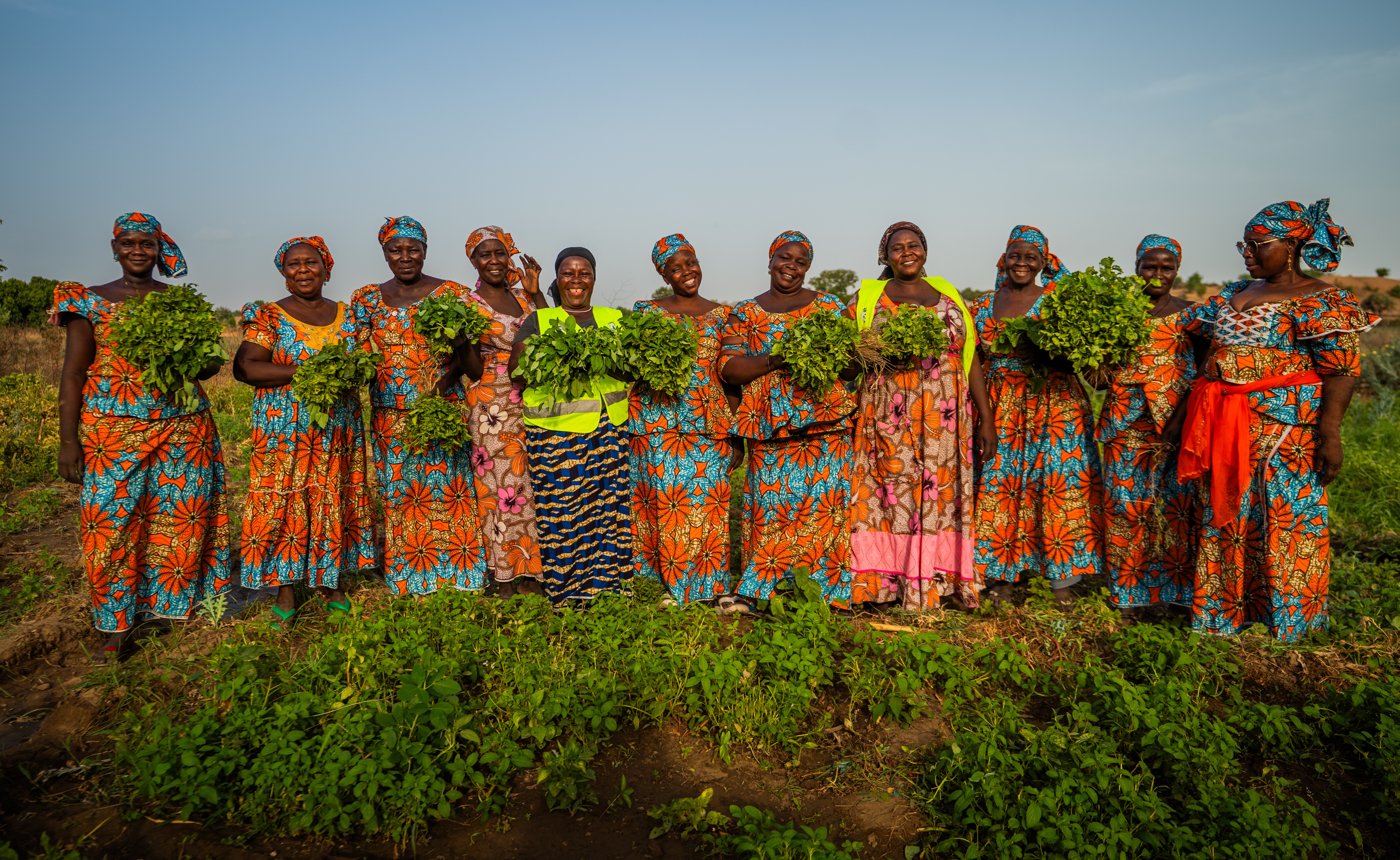
Photo credit: UN CTCN/Miranda Rikki Tasker
In Garoua 2 and Figuil, two villages located 700 kilometers north of the capital Yaoundé, five hundred students and dozens of women farmers are breaking new ground with Cameroon’s first synecoculture initiative. This farming method mimics natural ecosystems by growing diverse, edible plants densely and without chemicals, or tilling. By covering the ground with a variety of plants and avoiding mono cultures, the resilience of the soil grows and yields increase.
“Even in the dry season, we can grow crops. We can cultivate, produce, and sell. Is there anything better than that?!” exclaims Asta Jeanne, President of the Femmes Guidar de Figuil Association.
Photo credit: UN CTCN/Miranda Rikki Tasker
Backed by the Climate Technology Centre and Network (CTCN) in partnership with Terres des Jeunes, Care Society and Environment (CASE), and Cameroon’s Ministry of Environment and Sustainable Development, this nature-inspired, high-yield system is reviving drained and dry soils, turning abandoned fallows into year-round abundance. These lush polycultures, protected by artisanal woven barriers and thorny hedges from hungry cows and goats, form green oases amid yellow drylands.
“In monoculture, you plant once, harvest once, then wait. With synecoculture, it’s continuous: you harvest and replant at the same time,” says Ruth Langsi Yeloma, President of Terre Des Jeunes. “On cracked land, we managed to grow plants.
With erratic rainfalls and soaring temperatures, traditional monocultures are collapsing, leaving communities fearful of mounting hunger, and the reality that climate change and the resulting droughts will only deepen their struggle.
“We have a dynamic youth, a dynamic population, but alas, we have a water problem. They are afraid. They have understood the necessity of synecoculture,” stresses Lawan Hassana Hamadjam, the traditional chief of Nyakira in Garoua.
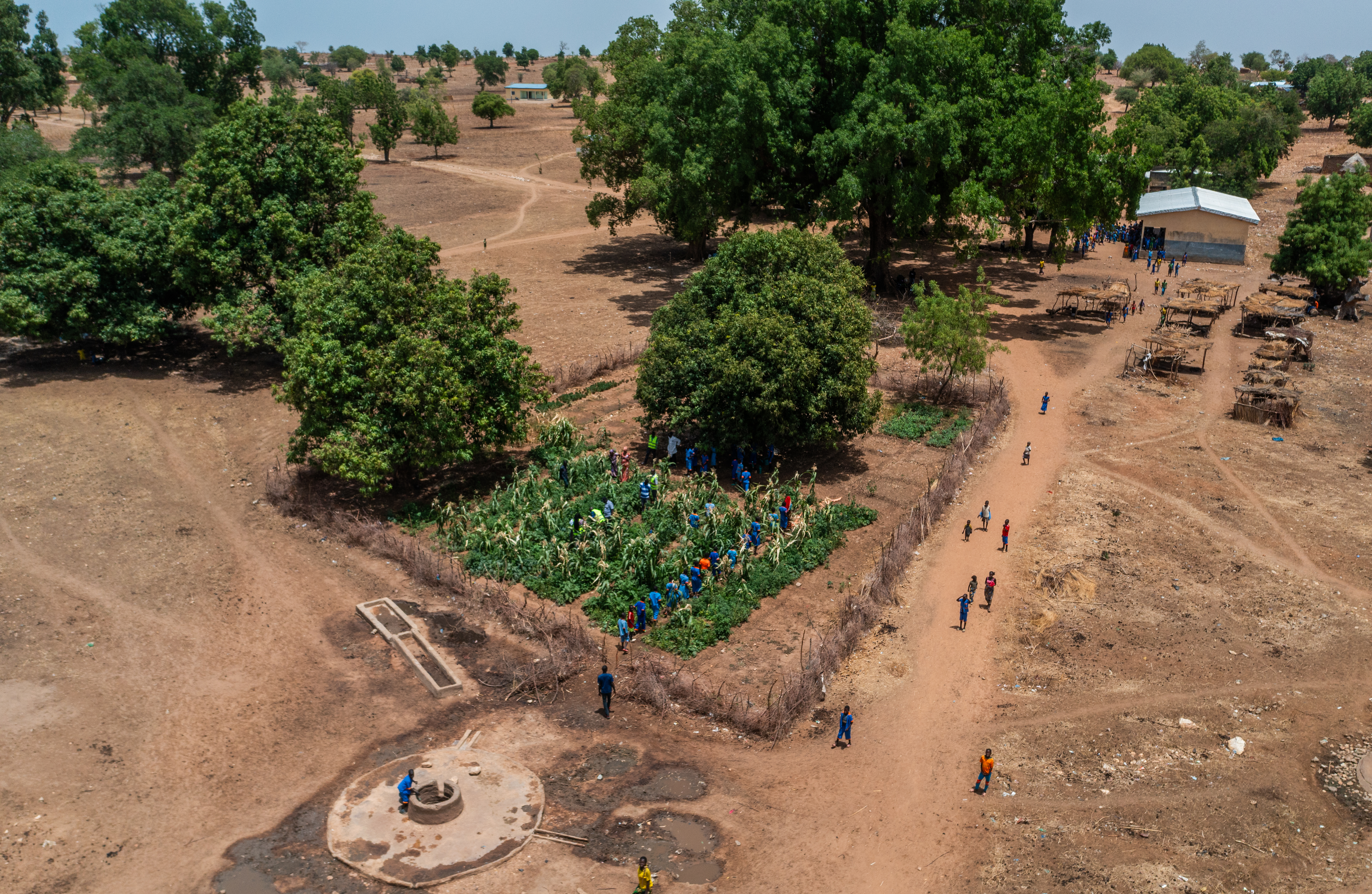
Synecoculture weaves together dense polycultures whose layered root networks mine moisture at every depth, maximising every precious drop of water. Trees like neem and moringa planted within the crops send their roots deep into hidden aquifers, drawing moisture upward to feed shallow-rooted greens under a cooling canopy. The constant ground cover and shade slow evaporation, locking water into the soil.
“All year long, we have green, and green is a source of carbon capture,” noted Ruth Langsi Yeloma. ”We fight climate change with synecoculture. It’s more than a philosophy; we use nature as our guide.”
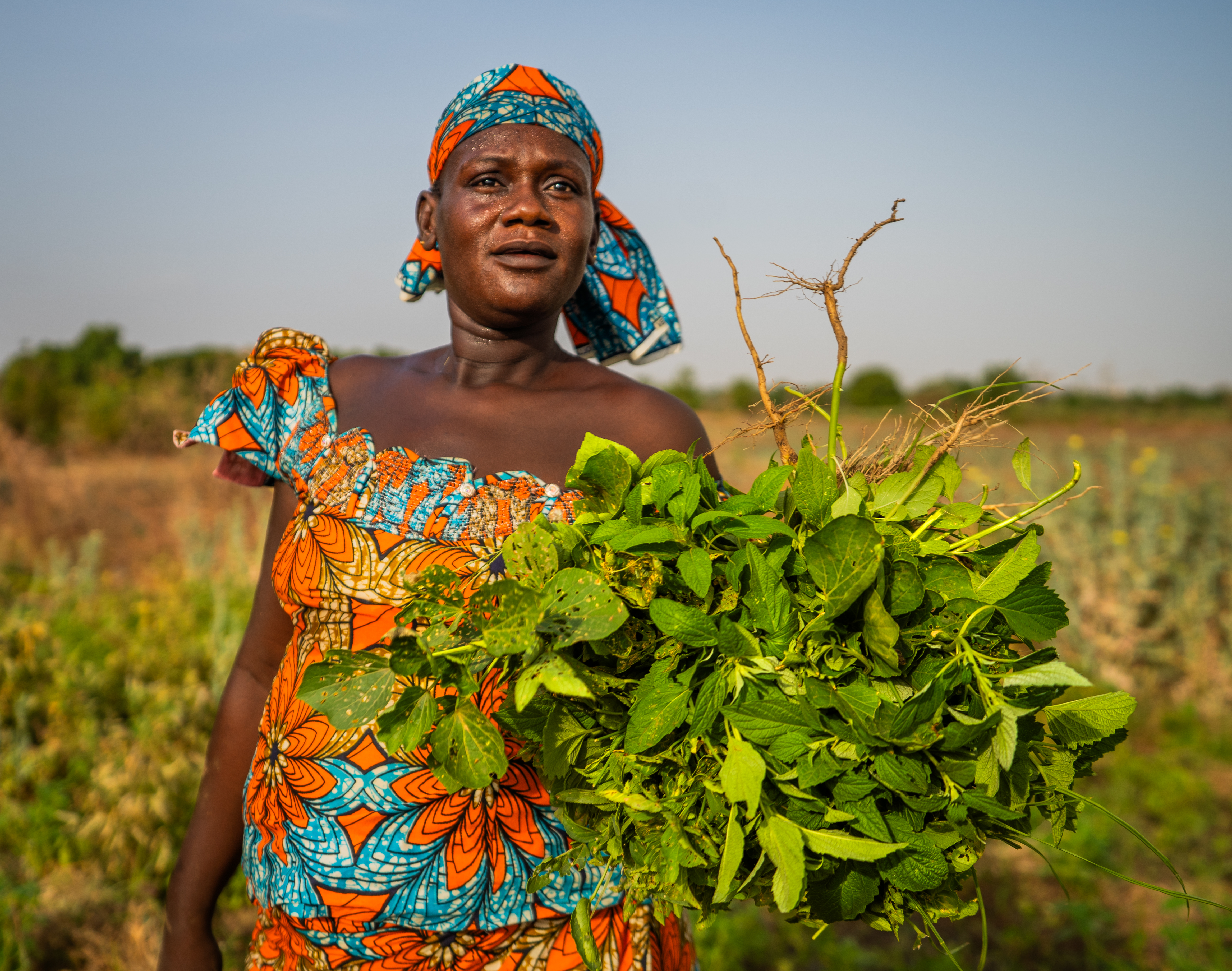
Photo credit: UN CTCN/Miranda Rikki Tasker
Breaking from conventional practices, farmers are growing chemical-free, organic produce that commands premium prices at local markets. Year-round harvests mean a steady stream of income, and with both quality and quantity rising, farmers can now reinvest in their families and businesses.
“It’s especially beneficial for women,” insists Asta Jeanne. “Here in northern Cameroon, most wealth belongs to men. It is not the woman who owns the land, the cattle, the goats. Men say vegetables are women’s business, but we know what we gain from it! We sell the vegetables ourselves and so the money is ours; we manage our own earnings. Is there anything better than that?!”
Synecoculture brings health to the land, the economy and also to the community. “We eat at least fifteen varieties of leaves,” says Caroline Nguetti, counselor of the Femmes Guidar de Figuil Association. “Since I started eating organic with synecoculture, I no longer have back or kidney problems; it brings me great joy.”
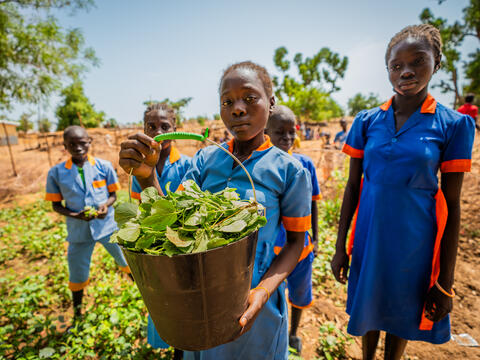
Beyond improving well-being, synecoculture is also shaping the future of sustainable farming by cultivating a new generation of climate-smart farmers, starting in schools. Here, students, with their hands in the soil, plant, tend and harvest their own greens, proudly filling baskets with leaves they nurtured from seed.
“The children were moved. They were very happy. Each one suggested their own plant to grow,” recalls Flora Welcome, director of Tongo 1 Public School. “A child who is well-fed comes to school and loves learning.” Her students now carry fresh greens to their midday meals, and newfound ecological knowledge home.
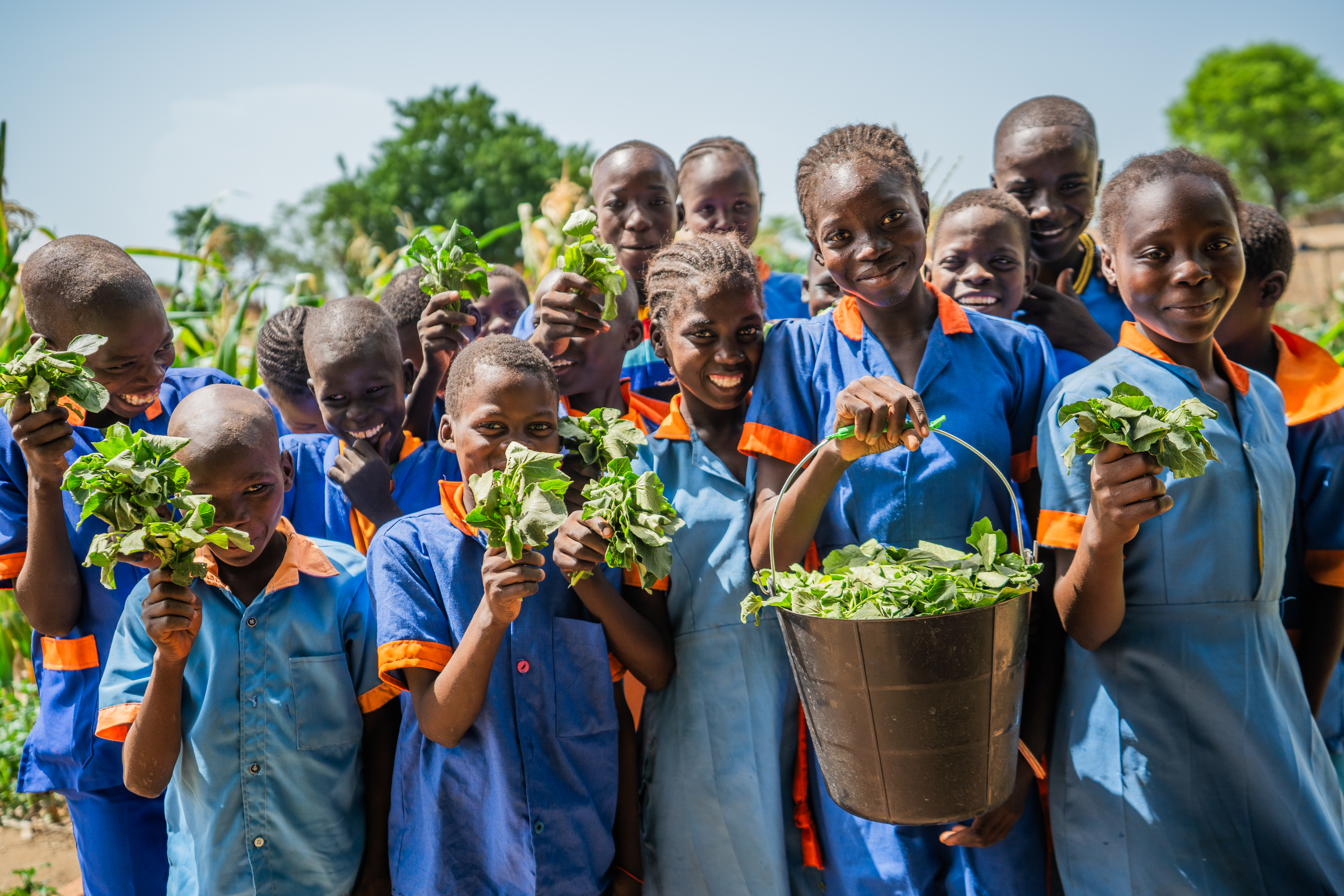
Photo credit: UN CTCN/Miranda Rikki Tasker
Djetarbodoum Rigober, a student, beams with pride: “The plants grew. Then we harvested. I will advise my parents to do the same: a garden around our home… I love synecoculture!”
From national ministries to local classrooms and farms, this multi-level collaboration is yielding valuable insights from each plot by tracking irrigation savings, soil regeneration, and crop yields. With promising results already in hand, the goal is now to scale up the initiative and embed synecoculture into the national curriculum, making climate-smart farming a cornerstone of education and resilience across Cameroon.
“You must understand that this project is a major endeavour. If we adopt it, it will save lives by improving health, boosting production, and even restoring a favourable climate,” insists Lawan Hassana Hamadjam.
“Climate change concerns everyone. Where it used to be hot, it will become even hotter. Where it used to rain less, it will rain even less. This concerns us all, and we are all called to fight this phenomenon,” warns Timothée Kagombe, Climate Change Coordinator at Cameroon’s Ministry of Environment and Sustainable Development. “Women are ready to get involved, and this will reduce dependence on weather extremes and strengthen community resilience.”
In the face of drought and poverty, synecoculture offers more than food. It works with nature, not against it, to spark economic opportunity, restore health, and build lasting resilience in the face of a changing climate.
“We said, ‘Let’s go, let’s try.’ And so we came, we tried, and we saw that it’s profitable. Tomorrow, we’ll start again and we’ll evolve,” concludes Asta Jeanne. “Why not? We can’t leave it at that.”
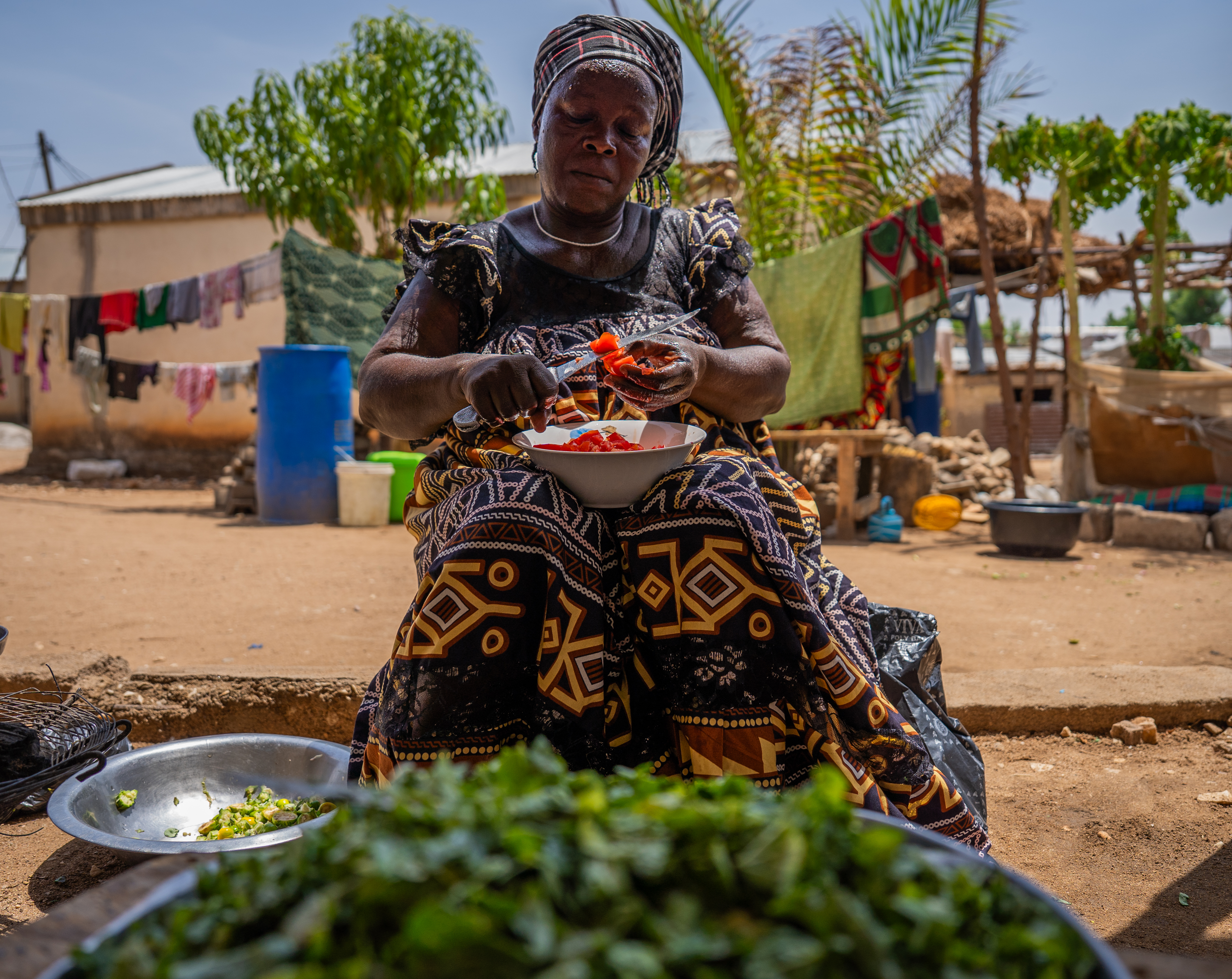
Photo credit: UN CTCN/Miranda Rikki Tasker
--------------------------------------------
Link to VIDEO https://youtu.be/9CAh0-cqPxQ
All photos and video are by photographer Miranda Rikki Tasker
Please Note: This initiative is supported by the UN Climate Technology Centre and Network (CTCN), in collaboration with Cameroon’s Ministry of Environment and Sustainable Development, and Care Society and Environment (CASE). Funding is provided by the European Commission to advance climate-resilient, low-carbon solutions across vulnerable regions.