News facts
Jeju, Republic of Korea, 1 September 2026 – Climate technology focal points and energy experts from 12 developing countries are gathering in Jeju for a four-day workshop and learning visit designed to turn national energy-system challenges into practical, country-owned climate technology project ideas.
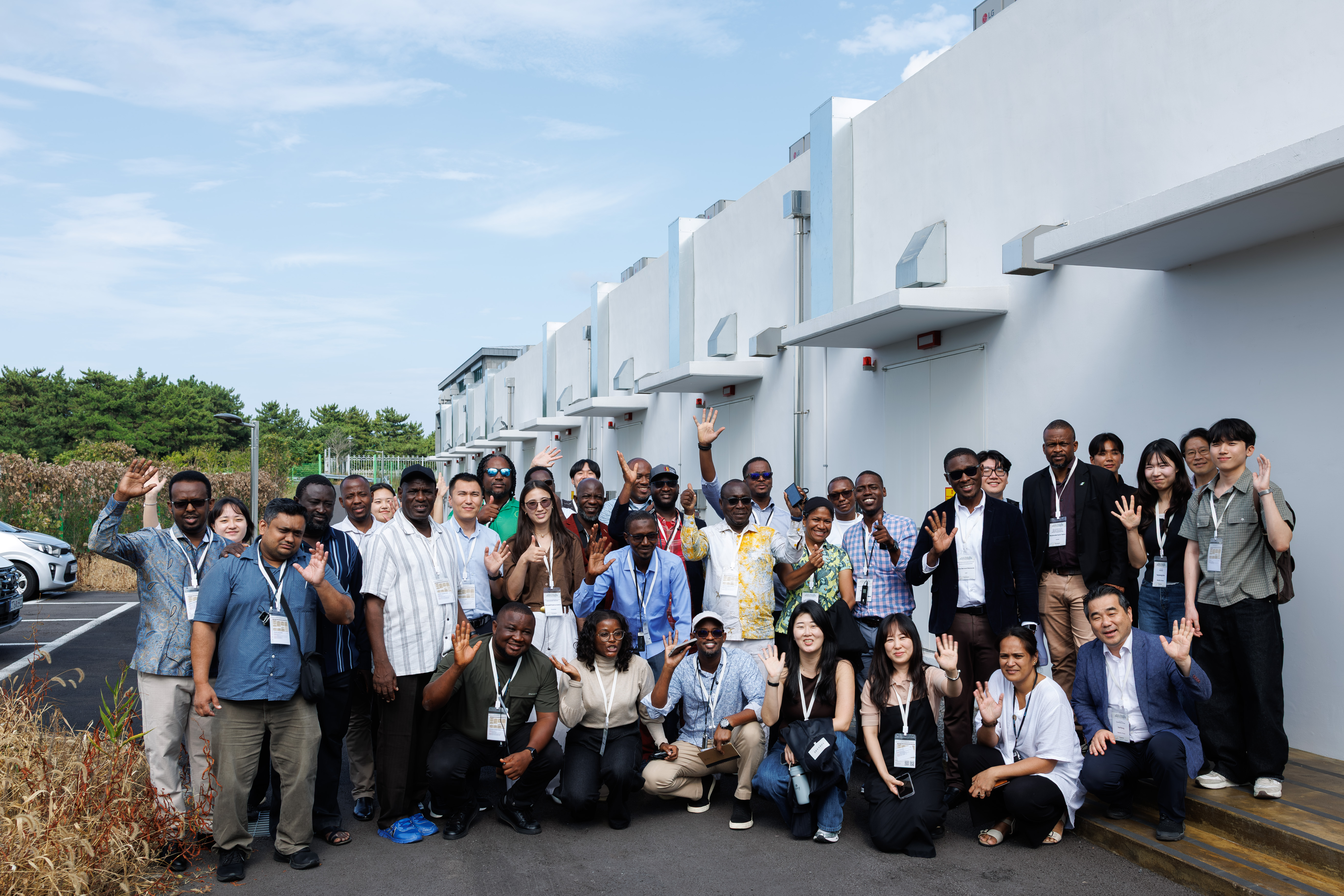
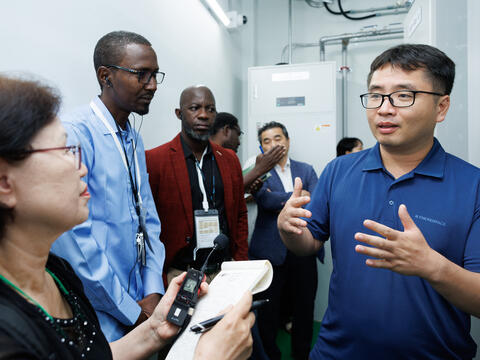
Co-hosted by the UN Climate Technology Centre and Network (CTCN), UNITAR CIFAL Jeju and the Korea Institute of Energy Research (KIER), the 2026 Energy Storage System Workshop and Learning Visit brings together NDEs and the nominated experts from Africa, Asia and the Pacific, and Latin America and the Caribbean.
Through peer exchange, technical discussions, laboratory and field visits, and facilitated project-development workshops, participants will explore how Energy Storage Systems (ESS) and related energy solutions can respond to their countries’ specific needs. The programme connects energy technologies with national innovation systems, enabling policies and financing pathways and helping participants move from identifying challenges to developing technically informed project ideas for potential CTCN collaborative Research, Development and Demonstration (cRD&D) technical assistance.
The participating countries are Chad, Côte d’Ivoire, Lesotho, Liberia, Somalia, Tanzania, the Gambia, Fiji, Kyrgyzstan, Papua New Guinea, Haiti, and Saint Kitts and Nevis, which were selected following a 2026 survey of NDE preferences and consultation with co-hosting organizations, with regional balance taken into account.
“Energy storage has been considered a pivotal technology for achieving the goal of the Paris Agreement by enabling the large-scale integration of renewable energy and as a key enabler of clean energy transitions,” said Suil Kang, Coordination Officer, UN CTCN. “I expect that this workshop and learning visit on energy storage can provide a venue for NDEs and experts to gain a solid understanding of the policy, technical, and financial aspects of energy storage, and develop concept notes that are both feasible and well-suited to the specific circumstances of each country.”
The programme builds on CTCN’s ongoing work to strengthen climate technology innovation and collaborative RD&D in developing countries. A global RD&D demand survey conducted in 2024–2025 identified strong interest among NDEs in learning and knowledge exchange on Energy Storage Systems. The Jeju programme follows earlier cRD&D bridge-building workshops held in conjunction with the World Climate Expo in Busan and provides an advanced, on-site opportunity to connect that learning with technology applications and implementation conditions.
Jeju provides a particularly relevant setting for this exchange. Over the past 15 years, the island has expanded renewable energy generation while advancing research, development and demonstration of energy storage and related technologies.
“It is particularly meaningful to host this event in Jeju, which has been at the forefront of Korea’s energy transition through the expansion of renewable energy generation and the widespread adoption of electric vehicles,” said Yong Seog Seo, Chief of the Jeju Global Research Center. “Going forward, KIER will continue to leverage its research capabilities to foster strong global networks and contribute to achieving carbon neutrality.”
During the first two days, hosted at the KIER Jeju Global Research Center, participants will examine national systems of innovation, share their countries’ energy-system priorities, and take part in technical discussions on renewable energy and energy storage. Laboratory and field visits will provide practical exposure to energy storage applications, including a visit to the Bukchon Battery Energy Storage System power plant.
The second part of the programme, hosted at UNITAR CIFAL Jeju, will focus on the policy and financial mechanisms needed to move technologies toward implementation. Discussions aim to address public, private and philanthropic financial support alongside CTCN’s technical assistance, capacity building and knowledge-sharing mechanisms.
Participants will then work in NDE-expert pairs to translate priority national energy-system challenges into initial climate technology project ideas. Facilitated sessions will help them define climate and development problems, identify technical, institutional, policy, capacity and financing barriers, and develop preliminary objectives, activities, outputs and expected outcomes. The project ideas will be further refined through technical consultation and peer review, including consideration of feasibility studies, pilot development, investment preparation and potential pathways to scale.
“We hope this event will serve as an opportunity for developing countries to strengthen their capacity to effectively respond to the increasingly complex requirements of international environmental agreements,” said Sungchul Shin, Director of UNITAR CIFAL Jeju.
With such learning visit programmes, the CTCN, together with its partners, aims to strengthen participants’ knowledge and endogenous capacity on energy storage, build collaborative RD&D capabilities in participating countries, and identify opportunities for North-South, South-South and triangular cooperation on ESS and other low-carbon and climate technologies.
The 2026 Energy Storage System Workshop and Learning Visit takes place from 1–4 September 2026 at the KIER Jeju Global Research Center and UNITAR CIFAL Jeju, Republic of Korea, as part of the 2026 Green and Climate Capacity Development Week for Asia and the Pacific.
Notes to editors
The Climate Technology Centre and Network (CTCN) facilitates the development and transfer of environmentally sound technologies for low-carbon and climate-resilient development at the request of developing countries. Over the past 12 years, CTCN has supported more than 110 countries through climate technology innovation, transfer and knowledge sharing.
The CTCN Partnership and Liaison Office, launched in 2022, works to strengthen innovation and collaborative Research, Development and Demonstration on climate technologies by engaging actors across national innovation systems, including research institutes, universities and the private sector.
The 2026 Energy Storage System Workshop and Learning Visit is co-hosted by the UN Climate Technology Centre and Network (CTCN), UNITAR CIFAL Jeju and the Korea Institute of Energy Research (KIER).