Events facts
UTC
Adaptation needs in the developing world are projected to surge to an astonishing $340 billion annually by the year 2030. The findings from The Adaptation Gap Report 2022: "Too Little, Too Slow" underline the concerns that our global efforts in adaptation planning, financing, and implementation are falling far short of keeping up with the escalating risks posed by climate change.
Hosted by UNEP Climate Technology Centre and Network (CTCN) and UN Development Programme (UNDP), we are excited to invite you to a dynamic panel discussion session at the Adaptation Futures Conference. This event aims to explore, accelerate, and foster climate change adaptation innovation, laying the groundwork for a robust, sustainable global response to climate challenges. The presented cases during the discussion will share key lessons and best practices for scaling up innovation at the local level.
The panel features leaders from the UNEP/CTCN-AFCIA grantees in Brazil, Colombia, Burundi, and Saint Kitts, who will share their on-the-ground experiences as well as representatives from UNDP, UNEP/CTCN, and the Adaptation Fund, the AFCIA donor, will contribute their insights. The primer focus will be on making adaptation choices, the power of nature for climate action, and teaching and learning adaptation in a changing climate.
Burundi and Saint Kitts will take center stage as they showcase their innovative adaptation projects:
In Burundi, a pioneering initiative supported by the Adaptation Fund, AFCIA, through the UNEP-CTCN component, has engineered and field-tested an affordable, climate-resilient, reusable, easily replicable, and mobile flood barrier. This groundbreaking solution not only prevents flood-related damage but also safeguards water accessibility during droughts. The pilot project was implemented in the Rubira Hills, Musenyi area of Mpanda, within the commune of Bubaza, Burundi.
Meanwhile, in Saint Kitts, also funded through the Adaptation Fund, AFCIA, through the UNEP-CTCN component, the focus was on optimizing water resource utilization. This was achieved by integrating drought risk modeling as a strategic planning tool for climate adaptation. The technical team provided crucial support, conducting assessments on drought risk and water resources, ultimately conceiving and executing a robust drought prevention model.
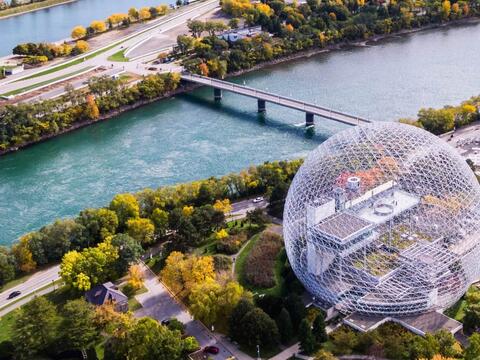
Where: Montreal, Canada (and virtual observance)
13:30 – 14:30 Session 3. The Innovation Process: How is it done?
The live-stream will be available here.
The key questions to be explored are:
- What is innovation?
- What is the process like?
- How can it work for adaptation?
- Is innovation really the answer or should we look to existing solutions?
- Innovation entails risk and failure. Can we afford to fail?
Speakers
- Andy Kerr, Climate-KIC
- Nanko Madu, AfriLabs
- Bill Wright, Enterprise Neurosystem
- Rajiv Garg, Climate Technology Centre and Network (CTCN)
- Biron Nicolas, Desjardins International Development (DID)
- Edith Adera, AfDB, Africa adaptation acceleration program
- Rita Effah, AfDB, Africa Climate Change Fund
- Adaptation Fund hosts: Saliha Dobardzic, Marcus Johannesson
- Facilitation: Eleanor Saunders
14:30 – 15:30 Session 4. Locally led innovation: What does it look like?
The live-stream will be available here.
Key questions:
- What is LLA and why is it such an important adaptation action?
- What are the lessons, challenges and opportunities as experienced by the AFCIA grantees?
- What are the models of finance for innovation in adaptation?
- How can we continue to adapt and grow this success?
- The session will be a facilitated two-way knowledge exchange session between funders of adaptation initiatives and their grantees in the panel, as well as the audience members.
Speakers
- Omar Saleh, Zephyr Consulting, Burundi
- Gina Tsarouchi, HR Wallingford’s Flood and Water Management Group
- André Luiz Gonçalves, Instituto Federal Catarinense
- Gideon Blaauw, CleantechHUB
- Laode Syarif, Kemitraan, Indonesia
- Phuntsho Choden, Bhutan Trust Fund for Environmental Conservation (BTFEC)
- Tamara Alefaio Greenstone, Micronesia Conservation Trust (MCT)
- Facilitation: David Gonzalez, the Global Resilience Partnership, Natalia da Luz, UNDP, Shuchi Vora, the Global Resilience Partnership