Background
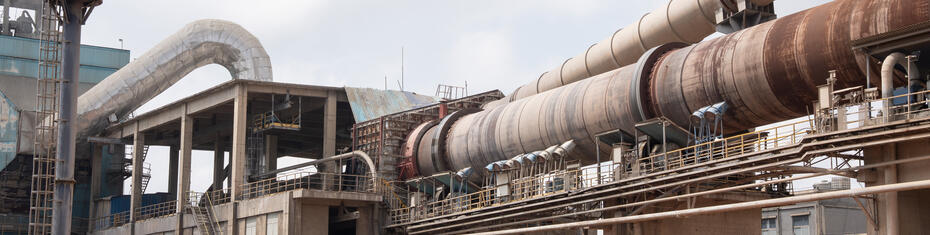
Cement is the most widely used building material in the world, and its production accounts for approximately 7–8% of global man-made CO₂ emissions. In Ethiopia, rapid urbanization and large-scale infrastructure development are driving strong growth in cement demand, with twelve manufacturers currently operating at a combined installed capacity of around 17 million tonnes per year. As a hard-to-abate sector, the cement and concrete industry faces significant challenges in reducing emissions while meeting this rising demand.
Ethiopia's pathway to decarbonizing its cement sector is constrained by limited awareness of cost-effective solutions, gaps in regulatory standards and incentives, governance and monitoring weaknesses, and a lack of effective financing pathways. Although the country has set a net-zero target by 2050 under its Long-Term Low Emission Development Strategy (LT-LEDS) and conducted energy audits of cement plants in 2021, implementation has been slow due to weak coordination among stakeholders and limited access to finance.
CTCN Support
This technical assistance will support Ethiopia in developing a national deep decarbonization roadmap for its cement and concrete industry, built on a robust Monitoring, Verification and Enforcement (MV&E) framework and a digital reporting platform to track cement data and decarbonization actions. It will establish a sector baseline and emissions inventory, deploy the GCCA "Getting the Numbers Right" (GNR) Cement Reporting Platform, and evaluate low-carbon technologies and decarbonization levers—such as clinker substitution (including LC3), alternative fuels, waste heat recovery, and energy-efficient grinding—through a multi-criteria assessment tailored to the Ethiopian context.
The assistance will also review the policy and regulatory environment, quantify the contribution of each lever to emission reductions for 2030, 2040 and 2050, and consolidate the findings into a suite of lever-specific action programmes covering technology, policy, finance, and capacity building. This work is embedded in a larger coordinated programme on cement decarbonization implemented jointly with UNIDO, the African Development Bank (AfDB), and UNDP.
Expected Outcome
Ethiopia has enhanced national capacities to decarbonize its cement and concrete industry through a clear, endorsed national roadmap, an effective MRV framework, and an operational digital reporting platform. These foundations will enable government institutions, industry, and financial stakeholders to align on emission reduction targets, prioritize viable technologies, and mobilize the investment needed to scale low-carbon cement production.
Seeking experts
The CTCN invites qualified experts and firms to submit Expressions of Interest (EOI) to participate in this initiative. For further information on this opportunity, visit the UN Global Marketplace (UNGM) or the UN website. Deadline for applications: 21 August 2026.
If you are not yet a member of the CTCN Network, you can apply to join here.


